Botanical Source, Extraction Process, Physicochemical Properties & Mechanism of Action
Jul 03, 2026
Bakuchiol Ultimate Guide (2026)
Part 2: Botanical Source, Extraction Process, Physicochemical Properties & Mechanism of Action
Botanical Source of Bakuchiol
Where Does Bakuchiol Come From?
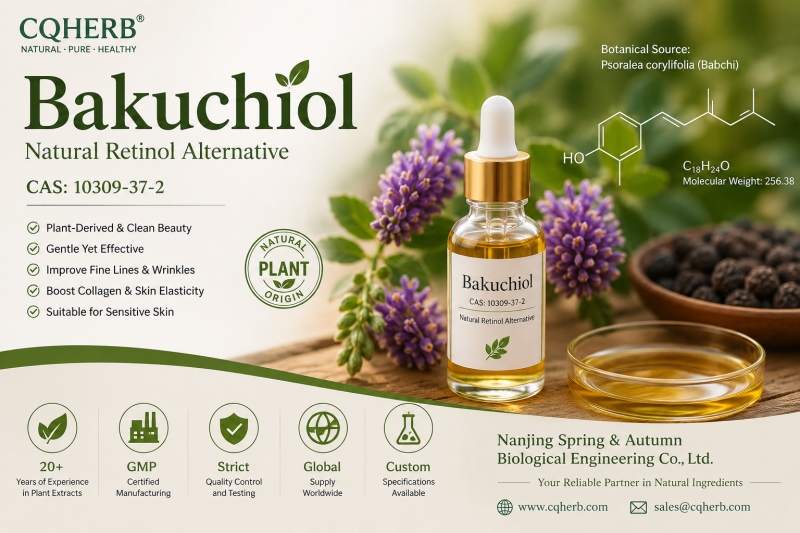
Bakuchiol is a naturally occurring meroterpene phenol primarily isolated from the seeds and leaves of Psoralea corylifolia L., a medicinal plant belonging to the Fabaceae family. Commonly known as Babchi, this botanical species has been used for centuries in traditional herbal medicine across China, India, and other parts of Asia.
Historically, Psoralea corylifolia has been valued for supporting skin health and has appeared in numerous traditional herbal formulations. Modern phytochemical research later identified Bakuchiol as one of its major bioactive constituents, attracting significant interest from cosmetic scientists due to its favorable balance of efficacy and skin compatibility.
Today, Bakuchiol is regarded as one of the most important botanical active ingredients used in premium anti-aging skincare products.
Botanical Information
Item
Description
Botanical Name
Psoralea corylifolia L.
Common Name
Babchi
Plant Family
Fabaceae
Plant Part Used
Seeds (primary), Leaves
Major Active Compound
Bakuchiol
Traditional Applications
Herbal medicine and skin care
Main Cultivation Regions
China, India, Southeast Asia
Why Is Psoralea corylifolia an Ideal Source?
Compared with many botanical extracts that contain only trace amounts of active compounds, Psoralea corylifolia naturally contains a relatively high concentration of Bakuchiol. This makes it one of the most commercially viable plant sources for industrial production.
Several factors contribute to the quality of Bakuchiol raw materials:
Geographic origin of the plant
Harvest season and maturity
Drying and storage conditions
Extraction technology
Purification process
Quality control during manufacturing
For cosmetic manufacturers, the consistency of the botanical raw material is just as important as the final purity of Bakuchiol. Stable sourcing helps ensure batch-to-batch reproducibility, which is essential for large-scale formulation and product performance.
How Is Bakuchiol Produced?
From Botanical Material to Cosmetic Active Ingredient
Commercial Bakuchiol production involves several carefully controlled steps designed to preserve the natural active compound while removing impurities. Although manufacturing processes may vary among producers, the overall workflow generally includes:
Step 1 – Raw Material Selection
High-quality Psoralea corylifolia seeds are selected based on botanical identification, moisture content, and quality standards.
Step 2 – Extraction
The dried botanical material is processed using appropriate extraction techniques to obtain the crude extract containing Bakuchiol and other naturally occurring constituents.
Step 3 – Purification
The crude extract undergoes multiple purification stages, such as solvent partitioning and chromatographic separation, to enrich the Bakuchiol content and reduce unwanted impurities.
Step 4 – Refinement
Further purification helps achieve the desired cosmetic-grade purity while maintaining product stability.
Step 5 – Quality Verification
Each production batch is typically evaluated using validated analytical methods, such as High-Performance Liquid Chromatography (HPLC), to verify identity, purity, and consistency.
Typical Quality Control Parameters
Reliable manufacturers generally evaluate several quality attributes before releasing Bakuchiol for commercial use.
Parameter
Typical Evaluation
Appearance
Visual inspection
Identity
HPLC
Purity
HPLC assay
Residual Solvents
According to applicable standards
Heavy Metals
ICP or equivalent methods
Microbiological Quality
Cosmetic quality requirements
Storage Stability
Long-term stability evaluation
For cosmetic brands, comprehensive technical documentation—including a Certificate of Analysis (COA), Technical Data Sheet (TDS), and Safety Data Sheet (SDS/MSDS)—is valuable for formulation development and regulatory compliance.
Physical and Chemical Properties
Understanding the physicochemical characteristics of Bakuchiol is essential for successful formulation development. These properties influence ingredient compatibility, stability, processing conditions, and final product performance.
Property
Specification
INCI Name
Bakuchiol
CAS Number
10309-37-2
Molecular Formula
C18H24O
Molecular Weight
256.38 g/mol
Chemical Class
Meroterpene Phenol
Appearance
Pale yellow to amber viscous liquid
Odor
Characteristic
Solubility
Soluble in oils, ethanol, and many cosmetic solvents
Water Solubility
Practically insoluble
Storage Conditions
Cool, dry, protected from light
Shelf Life
Typically 24 months under recommended conditions
Formulation Characteristics
Bakuchiol is compatible with a wide range of cosmetic ingredients, allowing formulators to develop multifunctional skincare products.
It is commonly combined with:
Niacinamide
Ceramides
Hyaluronic Acid
Peptides
Squalane
Tocopherol (Vitamin E)
Plant Oils
Botanical Extracts
This versatility enables the development of advanced formulations targeting multiple skin concerns simultaneously.
How Does Bakuchiol Work?
Mechanism of Action
Although Bakuchiol is structurally different from retinoids, numerous studies suggest that it can influence several biological pathways involved in skin rejuvenation.
Rather than acting as a vitamin A derivative, Bakuchiol appears to modulate cellular signaling associated with extracellular matrix maintenance, collagen synthesis, antioxidant defense, and skin barrier support.
Current research indicates that Bakuchiol may contribute to healthier-looking skin through several complementary mechanisms.
1. Supports Collagen Production
Collagen is one of the most important structural proteins responsible for maintaining skin firmness and elasticity. Natural collagen production gradually declines with age, contributing to wrinkles and skin laxity.
Research suggests that Bakuchiol may promote the expression of genes involved in collagen synthesis, helping improve the appearance of aging skin.
2. Helps Reduce Oxidative Stress
Daily exposure to ultraviolet radiation, environmental pollution, and other external stressors generates reactive oxygen species (ROS), which accelerate visible skin aging.
Bakuchiol exhibits antioxidant activity that helps neutralize free radicals, supporting healthier skin and protecting cellular structures from oxidative damage.
3. Supports Skin Barrier Function
A healthy skin barrier is essential for maintaining hydration and reducing sensitivity.
Bakuchiol has been reported to help support barrier integrity, making it particularly attractive for formulations designed for dry or sensitive skin.
4. Improves Visible Skin Texture
Regular use of Bakuchiol-containing skincare products has been associated with improvements in:
Skin smoothness
Skin firmness
Elasticity
Overall skin radiance
Appearance of fine lines and wrinkles
These benefits have contributed to its widespread adoption in anti-aging formulations.
5. Soothes the Skin
Unlike many conventional retinoids, Bakuchiol is generally well tolerated.
Its favorable skin compatibility makes it suitable for formulations intended for sensitive skin, helping cosmetic brands expand their product offerings to a broader consumer base.
Expert Insight
One of the key reasons behind Bakuchiol's rapid adoption is not that it is simply a "natural retinol." Instead, it offers formulators greater flexibility by combining anti-aging efficacy with improved tolerability. This allows brands to create products that appeal to consumers seeking high-performance skincare without the irritation commonly associated with traditional retinoids.
For product developers, ingredient quality is equally important. Consistent purity, validated analytical testing, and stable manufacturing processes all contribute to predictable formulation performance and long-term product reliability.
CQHERB Technical Note
At Nanjing Spring & Autumn Biological Engineering Co., Ltd. (CQHERB), Bakuchiol is supplied with strict batch quality control and comprehensive technical documentation to support cosmetic product development. Depending on customer requirements, we can provide COA, TDS, SDS/MSDS, chromatographic data, and customized packaging solutions. Our focus is on delivering reliable botanical active ingredients that help customers accelerate formulation development while maintaining consistent product quality.
Read More
 English




 IPv6 network supported