English


What Are You Looking For?
Boldine (CAS 476-70-0) – Chemical Information, Properties & B2B Supply
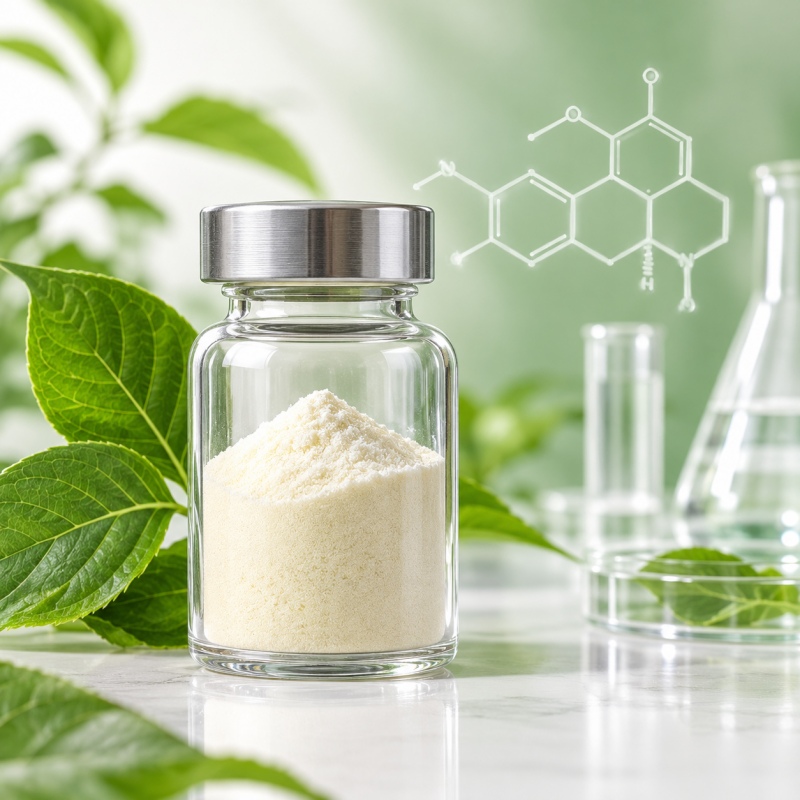
Boldine is a naturally occurring aporphine alkaloid with a well-defined molecular structure. It is a specialized natural compound of interest in natural product chemistry, phytochemical research, and analytical studies.
With its characteristic polycyclic alkaloid structure, Boldine is commonly investigated in the fields of natural compound identification, chemical characterization, and analytical method development.
For professional research and ingredient sourcing, product identity, purity specifications, analytical consistency, and batch traceability are important considerations when evaluating Boldine materials.
CQHERB supplies specialized botanical-derived compounds and natural product ingredients to international B2B customers, providing product specifications and relevant technical documentation to support customer evaluation and procurement.
Product Name :
BoldineCAS No. :
476-70-0Appearance :
Off-White PowderSpecification :
98%
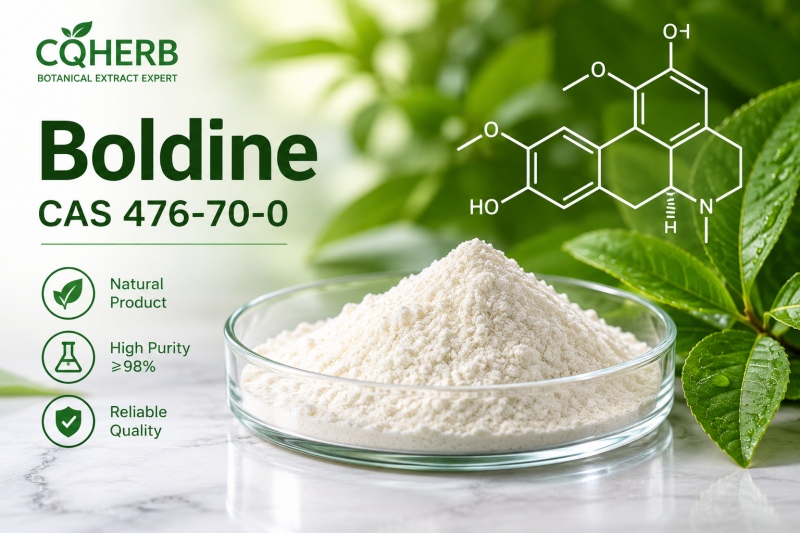
Boldine is a naturally occurring aporphine alkaloid identified in several plant species. It is a well-characterized natural product with a defined molecular structure and established chemical identifiers.
Also known as (+)-Boldine or (S)-Boldine, this compound has the molecular formula C19H21NO4 and a molecular weight of approximately 327.37 g/mol.
Boldine is of interest in natural product chemistry, phytochemical analysis, analytical research, and compound characterization.
CQHERB provides botanical-derived ingredients and specialized natural product materials for international B2B customers. We focus on product identification, specification transparency, analytical documentation, and professional technical communication.
|
Parameter |
Information |
|
Product Name |
Boldine |
|
Chinese Name |
波尔定碱 |
|
CAS Number |
476-70-0 |
|
Molecular Formula |
C19H21NO4 |
|
Molecular Weight |
327.37 g/mol |
|
EC Number |
207-509-9 |
|
PubChem CID |
10154 |
|
Chemical Classification |
Aporphine Alkaloid |
|
Synonyms |
(+)-Boldine; (S)-Boldine; 1,10-Dimethoxy-2,9-dihydroxyaporphine |
Boldine belongs to the aporphine alkaloid family, characterized by a distinctive fused-ring molecular framework.
Its molecular structure contains:
· A polycyclic alkaloid skeleton
· Two methoxy groups
· Two hydroxyl groups
· A nitrogen-containing heterocyclic structure
Molecular Formula: C19H21NO4
Molecular Weight: 327.37 g/mol
The chemical structure and molecular identifiers provide a standardized basis for compound identification and analytical evaluation.
Boldine has been reported in several plant species, including members of the Lauraceae family.
Its occurrence in different botanical materials makes botanical source identification and raw material traceability important considerations in natural product research.
For commercial procurement, buyers should confirm the botanical source and manufacturing origin with the supplier rather than assuming that all Boldine materials originate from the same plant species.
The quality evaluation of Boldine should consider both chemical identity and quantitative purity.
Depending on the intended analytical requirements, relevant characterization techniques may include:
· High-Performance Liquid Chromatography (HPLC)
· Liquid Chromatography–Mass Spectrometry (LC-MS)
· Nuclear Magnetic Resonance (NMR)
· Other appropriate analytical identification methods
The analytical method, reference standard, chromatographic profile, and batch-specific results should be reviewed when evaluating a commercial product.
For professional B2B procurement, product evaluation should include:
· Chemical identity
· Purity specification
· Analytical methodology
· Batch consistency
· Manufacturing traceability
· Packaging and storage information
Available technical documentation should be confirmed according to the actual product specification and customer requirements.
Typical documentation may include:
· Certificate of Analysis (COA)
· Product Specification
· HPLC Chromatogram
· Safety Data Sheet (SDS)
· Technical Data Sheet (TDS)
Boldine is relevant to several areas of natural product and analytical research, including:
· Natural Product Chemistry
· Phytochemical Analysis
· Alkaloid Research
· Analytical Method Development
· Chemical Characterization
· Reference Compound Evaluation
The suitability of a particular Boldine specification depends on the intended research protocol and applicable technical requirements.
When sourcing Boldine, professional buyers should consider more than the quoted price.
Important evaluation points include:
1. Chemical Identity: Confirm CAS 476-70-0 and the corresponding molecular structure.
2. Purity Specification: Request the actual batch specification and analytical results.
3. Analytical Support: Review the available HPLC chromatogram and identity documentation.
4. Source Transparency: Confirm botanical origin and manufacturing information.
5. Batch Consistency: Evaluate whether the supplier can maintain the agreed specification.
6. Documentation: Confirm the availability of COA, SDS, and other relevant technical documents.
Q1: What is Boldine?
Boldine is a naturally occurring aporphine alkaloid with the chemical formula C19H21NO4.
Q2: What is the CAS number of Boldine?
The CAS number is 476-70-0.
Q3: What is the molecular weight of Boldine?
Its molecular weight is approximately 327.37 g/mol.
Q4: What is the molecular formula of Boldine?
The molecular formula is C19H21NO4.
Q5: What chemical family does Boldine belong to?
Boldine belongs to the aporphine alkaloid family.
Q6: Which plants contain Boldine?
Boldine has been reported in several plant species, including Litsea glutinosa and Neolitsea konishii.
Q7: How is Boldine identified?
Chemical identity can be evaluated using appropriate analytical techniques such as HPLC, LC-MS, and NMR.
Q8: What documents should buyers request?
Commonly requested documents include COA, product specifications, HPLC chromatograms, and SDS.
CQHERB is a B2B supplier of botanical extracts and specialized natural product ingredients.
We support international customers with product information, technical documentation, analytical data, and sourcing communication.
Our product portfolio covers a range of botanical extracts and high-purity natural compounds for professional research and ingredient-development requirements.
We emphasize transparent specifications, reliable communication, and long-term B2B cooperation.
Contact CQHERB for product specifications, current availability, analytical documentation, and quotation information.
Whether you are evaluating a laboratory quantity or discussing a potential long-term supply project, our team can assist with your technical and procurement inquiries.
Contact CQHERB – Request Product Information & Quotation
Technical Disclaimer
The information on this page is provided for chemical identification and general technical reference. Product specifications and analytical results should be confirmed using the applicable batch documentation. This page does not make medical, therapeutic, or disease-related claims and does not establish suitability for food, dietary supplement, cosmetic, or pharmaceutical applications.
Cyclopamine 98% (CAS: 4449-51-8), a potent steroidal alkaloid targeting the Hedgehog pathway, selectively inhibits Smoothened (Smo) with IC50 of 46 nM. This pharma-grade inhibitor is validated for oncology research (pancreatic/basal cell carcinoma) and stem cell differentiation studies.
Read More
Ingenol is a high-purity pharmaceutical intermediate derived from natural plant sources. Our product guarantees over 99.0% purity and rigorous quality control, ensuring reliability for research and production needs . With competitive pricing and flexible global logistics, we provide seamless supply chain support to meet diverse customer demands.
Read More
A naturally derived pentacyclic triterpenoid, Lupeol is extracted from plant sources such as strawberries, mangoes, and traditional herbs. With over 99% HPLC purity, our Lupeol meets rigorous pharmaceutical standards for research and production.
Read More
Curculigoside is a high-purity phenolic glycoside isolated from Curculigo species, extensively utilized in pharmacological research for its potent bioactivities. With HPLC-confirmed purity ≥98%, this compound serves as a critical reference standard in drug discovery and mechanistic studies.
Read More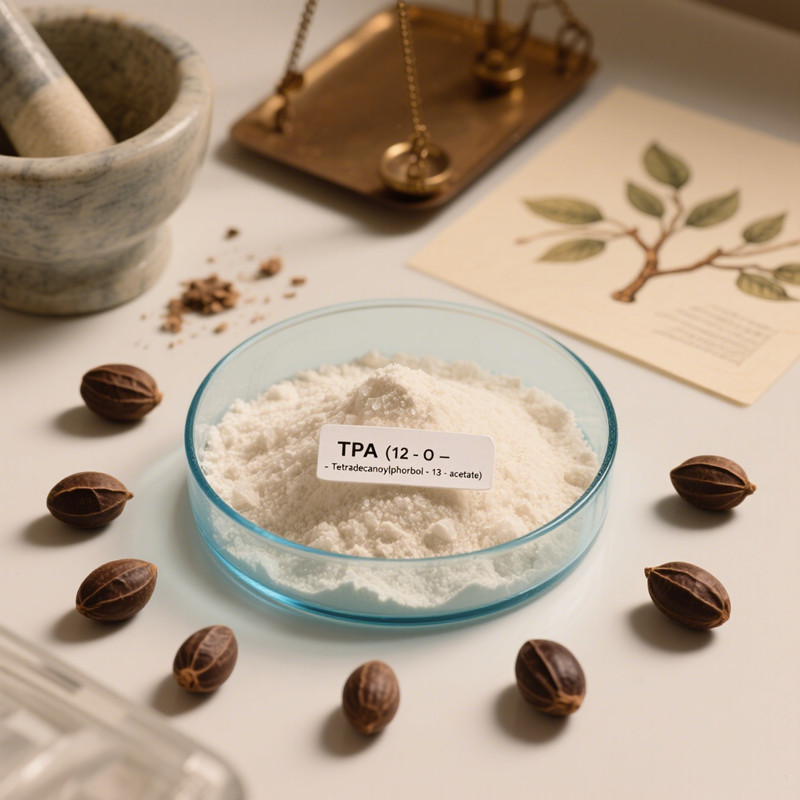
Phorbol 12-Myristate 13-Acetate (PMA) 98% (CAS:16561-29-8) is an ultra-pure, crystalline PKC activator derived from Croton tiglium seeds, validated for tumor promotion and immunology research. With ≥98% HPLC-verified purity, it reliably induces PKC-dependent pathways at 1-100 nM concentrations in models ranging from DMBA-initiated carcinogenesis to neutrophil NETosis studies.
Read More


 IPv6 network supported