Dimethylcurcumin (ASC-J9) CAS 52328-98-0 | Research Compound
Sep 10, 2026
Dimethylcurcumin (ASC-J9): Chemical Identity, Research Applications and Buyer Guide
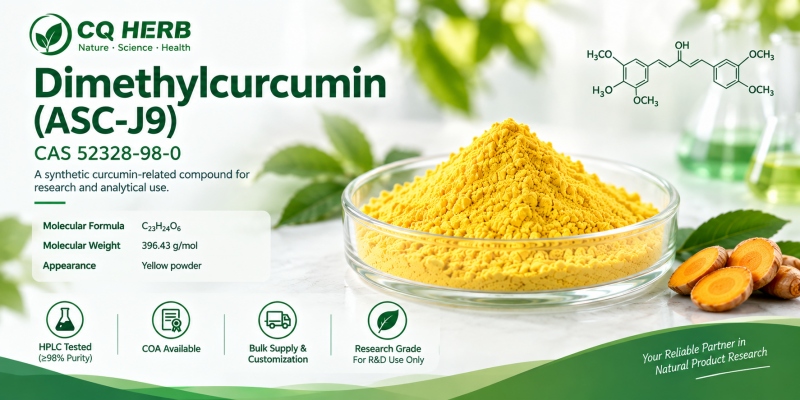
Dimethylcurcumin, also known as ASC-J9 or GO-Y025, is a defined chemical compound associated with curcumin-related chemical research. With CAS No. 52328-98-0, molecular formula C23H24O6, and molecular weight 396.43 g/mol, it is supplied as a research material for laboratory, analytical, biochemical, and chemical research.
For researchers and B2B buyers evaluating Dimethylcurcumin, understanding its chemical identity, analytical specifications, documentation, and supply form is more important than relying on biological activity claims.
CQ HERB supplies research-grade Dimethylcurcumin with batch-specific quality documentation according to the agreed specification.
Quick Answer
What is Dimethylcurcumin (ASC-J9)?
Dimethylcurcumin is a synthetic curcumin-related compound identified by CAS 52328-98-0.
It is also known as:
· ASC-J9
· ASC J9
· GO-Y025
· Dimethylcurcumin
According to PubChem, Dimethylcurcumin has the molecular formula C23H24O6 and a molecular weight of approximately 396.43 g/mol. PubChem also records ASC-J9 and GO-Y025 among its synonyms.
Unlike conventional curcumin obtained from botanical sources, Dimethylcurcumin should be described as a defined synthetic chemical compound, rather than as a conventional Curcuma longa extract.
Key Takeaways
· Product Name: Dimethylcurcumin
· Research Code: ASC-J9
· Alternative Name: GO-Y025
· CAS No.: 52328-98-0
· Molecular Formula: C23H24O6
· Molecular Weight: 396.43 g/mol
· Appearance: Powder
· Chemical Category: Curcumin-related synthetic compound
· Typical Research Grade: ≥98% HPLC, subject to batch specification
· Primary Positioning: Research and analytical material
· Documentation: COA, HPLC data, SDS and TDS according to specification
Commercial research suppliers also list ASC-J9 under CAS 52328-98-0 with ≥98% HPLC specifications.
1. Chemical Identity of Dimethylcurcumin
Chemical identity is one of the most important factors when sourcing research compounds.
Basic Information
Property
Information
Product Name
Dimethylcurcumin
CAS Number
52328-98-0
Molecular Formula
C23H24O6
Molecular Weight
396.43 g/mol
Synonyms
ASC-J9; GO-Y025
Chemical Type
Synthetic curcumin-related compound
Appearance
Powder
Research Use
Laboratory and analytical research
The molecular identity, CAS number, formula and molecular weight are supported by PubChem and other chemical reference databases.
2. Dimethylcurcumin vs. Curcumin
Although the names are related, Dimethylcurcumin and conventional curcumin are different chemical compounds.
Property
Dimethylcurcumin
Curcumin
Common Name
Dimethylcurcumin
Curcumin
CAS
52328-98-0
458-37-7
Molecular Formula
C23H24O6
C21H20O6
Molecular Weight
396.43 g/mol
368.38 g/mol
Chemical Position
Synthetic curcumin-related compound
Natural curcuminoid
Typical Source Description
Defined chemical compound
Botanical-associated compound
Research Positioning
Research compound
Natural-product / biochemical research
This distinction is particularly important when purchasing material for analytical or laboratory work.
A supplier should not describe Dimethylcurcumin simply as "curcumin" because the two compounds have different chemical identities.
3. Why CAS 52328-98-0 Matters
A product name can sometimes be used inconsistently between suppliers.
For procurement and laboratory work, the most reliable starting point is the CAS number:
CAS No.: 52328-98-0
Buyers should cross-check the CAS number against:
· Molecular formula
· Molecular weight
· Structural information
· HPLC specification
· COA
· Batch information
This helps reduce the risk of receiving a related but chemically different curcuminoid or research compound.
4. Structural Information
Dimethylcurcumin is a defined organic molecule with the molecular formula C23H24O6.
Its systematic chemical name is:
(1E,4Z,6E)-1,7-bis(3,4-dimethoxyphenyl)-5-hydroxyhepta-1,4,6-trien-3-one
PubChem records the structure, InChI, InChIKey, SMILES and related chemical identifiers for CAS 52328-98-0.
For research projects involving structure-based analysis, these identifiers can be more useful than a commercial product name alone.
5. Research Context
ASC-J9 has appeared in scientific and biochemical research involving molecular signaling and androgen receptor-related mechanisms.
However, the presence of published research does not mean that a commercial Dimethylcurcumin product should be described as a therapeutic product.
For responsible B2B communication, CQ HERB recommends describing ASC-J9 using neutral terminology such as:
"Dimethylcurcumin is a research compound investigated in laboratory studies involving molecular signaling pathways."
This wording identifies the scientific context without presenting experimental findings as a product benefit.
6. Research Applications
Dimethylcurcumin may be relevant to several laboratory research contexts.
Chemical Research
Researchers can use Dimethylcurcumin as a defined chemical material for studies involving curcumin-related molecular structures and derivatives.
Analytical Research
A characterized Dimethylcurcumin material can be used where a defined analytical compound or reference material is required.
Biochemical Research
ASC-J9 has been investigated in laboratory research involving molecular and biochemical pathways.
Comparative Research
Dimethylcurcumin can also be included in comparative studies involving structurally related compounds.
These descriptions refer to research contexts only and do not constitute therapeutic or medical claims.
7. HPLC and Quality Control
For research compounds, identity and purity are critical procurement considerations.
CQ HERB recommends evaluating Dimethylcurcumin using appropriate analytical methods, including HPLC where applicable.
Typical documentation may include:
· Certificate of Analysis (COA)
· HPLC purity result
· HPLC chromatogram
· Product specification
· SDS
· TDS
· Batch information
· Storage recommendation
For example, commercial research suppliers list ASC-J9 with ≥98% HPLC specifications.
CQ HERB specifications should always be based on the actual production batch and current COA.
8. Appearance and Physical Form
Dimethylcurcumin is generally supplied as a powder or solid material.
Public chemical references report powder/solid physical forms, with color descriptions varying by source.
For commercial specifications, the actual CQ HERB batch specification should take priority over generic database descriptions.
A product specification may therefore state:
Appearance: Powder
with the specific color described according to the applicable batch COA.
9. Solubility and Laboratory Preparation
Dimethylcurcumin has limited water solubility and may be prepared using suitable organic laboratory solvents depending on the experimental system.
Published commercial reference information lists DMSO among solvents used for laboratory preparation.
Researchers should select solvents and concentrations according to their own validated experimental protocols.
10. Storage and Handling
Dimethylcurcumin should be stored according to the supplier's current product specification and SDS.
Recommended general practices include:
· Keep the container tightly closed.
· Protect from moisture.
· Protect from excessive light.
· Store under controlled temperature conditions.
· Avoid unnecessary repeated exposure to air.
Some commercial research references recommend low-temperature storage for ASC-J9.
The storage condition stated on the supplied COA, label and SDS should take precedence.
11. How to Select a Dimethylcurcumin Supplier
When comparing suppliers, buyers should consider more than the stated purity.
Check the CAS Number
Confirm:
52328-98-0
Check the Molecular Formula
Confirm:
C23H24O6
Check the Molecular Weight
Confirm:
396.43 g/mol
Request HPLC Data
Ask for the actual batch HPLC result and, when appropriate, the chromatogram.
Request a COA
The COA should identify the:
· Product
· CAS number
· Batch number
· Test result
· Test method
· Specification
Check Documentation
For international procurement, buyers may also need:
· SDS
· TDS
· COA
· HPLC chromatogram
· Commercial invoice
· Packing list
· Export documentation
12. Why Choose CQ HERB?
CQ HERB supplies Dimethylcurcumin for B2B research and development applications.
Our support can include:
· Research-grade material
· Batch-specific COA
· HPLC testing
· SDS
· TDS
· Flexible packaging
· Small research quantities
· Bulk supply
· Export documentation
· Customized analytical requirements
For projects requiring a specific purity or analytical method, buyers are encouraged to confirm the specification before placing an order.
Frequently Asked Questions
What is ASC-J9?
ASC-J9 is a research code name associated with Dimethylcurcumin, CAS 52328-98-0.
Is ASC-J9 the same as curcumin?
No. Dimethylcurcumin and curcumin are different chemical compounds with different molecular formulas and molecular weights.
What is the CAS number of Dimethylcurcumin?
The CAS number is 52328-98-0.
What is the molecular formula?
The molecular formula is C23H24O6.
What is the molecular weight?
The molecular weight is approximately 396.43 g/mol.
Is Dimethylcurcumin a plant extract?
No. CAS 52328-98-0 should be treated as a defined chemical compound rather than a conventional botanical extract.
What is Dimethylcurcumin used for?
It is supplied primarily as a research and analytical material for laboratory and chemical research.
Can CQ HERB provide a COA?
Yes. A batch-specific COA can be provided according to the applicable product specification.
Is a sample available?
Sample quantities can be discussed according to research requirements and current availability.
Technical Data Summary
Item
Information
Product
Dimethylcurcumin
Research Code
ASC-J9
Alternative Name
GO-Y025
CAS
52328-98-0
Formula
C23H24O6
Molecular Weight
396.43 g/mol
Form
Powder
Purity
≥98% HPLC*
Application
Research & analytical use
Documentation
COA / HPLC / SDS / TDS
* Subject to actual batch specification.
Research Use Disclaimer
For Research Use Only.
This product is supplied as a research and analytical material. It is not intended for human or veterinary use, diagnosis, treatment, cure, prevention of disease, or use as a pharmaceutical or dietary supplement unless separately authorized under applicable regulations.
Read More
 English




 IPv6 network supported