banner

Blog

Home

Blog

  • Cyclopamine (CAS 4449-51-8): Research Guide, Chemical Information, Botanical Source and Hedgehog Pathway Background
    Cyclopamine (CAS 4449-51-8): Research Guide, Chemical Information, Botanical Source and Hedgehog Pathway Background
    Aug 11, 2026
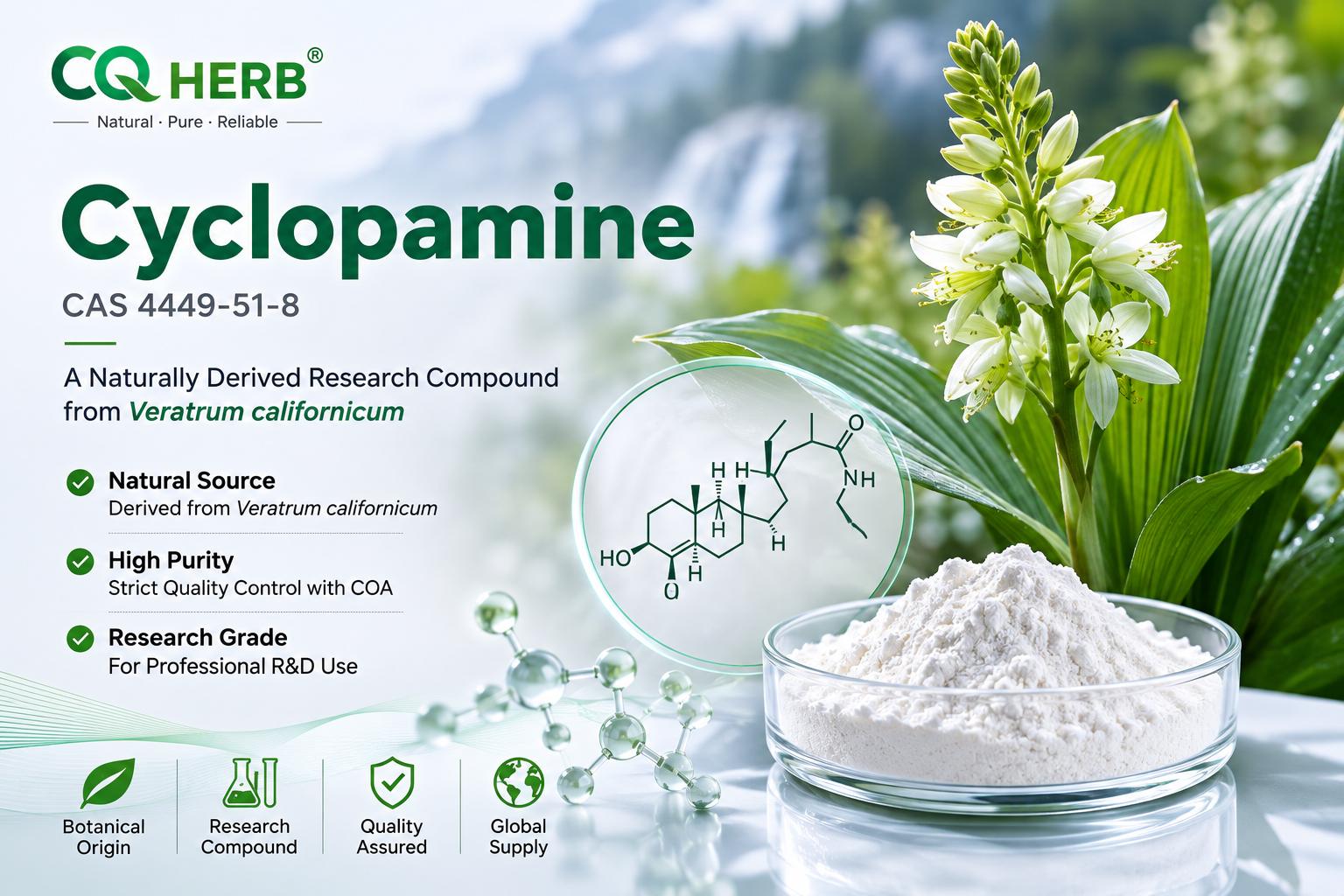
    Cyclopamine is a naturally occurring steroidal alkaloid associated with the plant *Veratrum californicum*, commonly known as corn lily or California false hellebore. It has attracted considerable attention in biochemical and cell-signaling research because of its interaction with the Hedgehog (Hh) signaling pathway.   For researchers and technical buyers, cyclopamine is primarily relevant as a research compound and molecular tool for investigating Hedgehog signaling, Smoothened (SMO), and related cellular processes.   This guide provides an overview of cyclopamine's chemical identity, botanical origin, research background, mechanism of action in the Hedgehog pathway, analytical considerations, and procurement considerations for laboratory research.   Research-use notice: Cyclopamine is discussed here as a research compound. The information on this page is provided for scientific and educational purposes and is not intended to describe cyclopamine as a pharmaceutical product or to recommend its use for the diagnosis, prevention, or treatment of any disease.   Quick Answer   Cyclopamine is a naturally occurring steroidal alkaloid associated with *Veratrum californicum*. Its CAS number is **4449-51-8**, and its molecular formula is **C27H41NO2**, with a molecular weight of approximately 411.6 g/mol.   In biochemical research, cyclopamine is best known as a small-molecule modulator of the **Hedgehog signaling pathway**, particularly through interaction with **Smoothened (SMO)**.   Because of its historical botanical origin and well-established role in Hedgehog pathway research, cyclopamine is frequently used as a reference compound in studies involving cellular signaling, developmental biology, molecular pharmacology, and compound screening.   Cyclopamine Chemical Information The basic chemical information for cyclopamine is summarized below.   | Property                             | Information                                         | | ------------------------------------ | --------------------------------------------------- | | Product Name                         | Cyclopamine                                         | | CAS Number                           | 4449-51-8                                           | | Alternative Name                     | 11-Deoxojervine                                     | | Molecular Formula                    | C27H41NO2                                           | | Molecular Weight                     | 411.6 g/mol                                         | | Chemical Class                       | Steroidal alkaloid                                  | | Natural Source                       | *Veratrum* species                                  | | Commonly Associated Botanical Source | *Veratrum californicum*                             | | Research Area                        | Hedgehog signaling and related biochemical research | | Typical Research Form                | Solid / powder reference material                   |   According to PubChem, cyclopamine is also known by the synonym 11-deoxojervine and is classified as a steroidal alkaloid. PubChem records cyclopamine in several *Veratrum* species, including *Veratrum californicum*.   For procurement and analytical documentation, the CAS number **4449-51-8** is particularly important because it helps distinguish cyclopamine from other structurally related *Veratrum* alkaloids.   What Is the Botanical Source of Cyclopamine?   Cyclopamine is closely associated with *Veratrum californicum*, a plant commonly referred to as corn lily or California false hellebore.   *Veratrum californicum* is native to mountainous regions of western North America. The plant contains a group of structurally related steroidal alkaloids, including cyclopamine and other *Veratrum* alkaloids.   Research on *Veratrum californicum* has shown that the alkaloid composition can vary according to plant part, collection location, and growth stage. Modern analytical studies have identified cyclopamine together with other steroidal alkaloids in the plant.   This botanical variability is important when discussing plant extracts versus isolated compounds.   A **cyclopamine reference compound is not equivalent to a whole *Veratrum* extract**.   A botanical extract may contain multiple alkaloids and other plant constituents, while purified cyclopamine represents a defined chemical component. Research comparing *Veratrum californicum* extracts with individual alkaloids has demonstrated that different alkaloid combinations can produce different experimental effects in Hedgehog pathway assays.   Cyclopamine and the Hedgehog Signaling Pathway   One of the most important reasons cyclopamine is studied is its relationship with the Hedgehog signaling pathway.   The Hedgehog pathway is a conserved cellular signaling system involved in developmental and differentiation processes. In mammals, the pathway involves several key components, including:   * Hedgehog ligands * Patched (PTCH) receptors * Smoothened (SMO) * Suppressor of Fused (SUFU) * GLI transcription factors   When Hedgehog signaling is activated, changes in SMO activity influence downstream signaling events involving GLI transcription factors.   Cyclopamine became an important molecular research tool because it can interfere with Hedgehog pathway signaling at the level of Smoothened. Scientific literature describes cyclopamine as an antagonist of SMO and an inhibitor of Hedgehog pathway signaling.   This makes cyclopamine useful for laboratory studies designed to investigate the biological consequences of modulating Hedgehog signaling.   How Does Cyclopamine Interact With Smoothened?   Smoothened, commonly abbreviated as **SMO**, is a seven-transmembrane protein that plays a central role in Hedgehog signal transduction.   In simplified terms, Hedgehog signaling can be viewed as a regulatory sequence:   **Hedgehog ligand → PTCH → SMO → GLI → downstream gene expression**   Cyclopamine acts at the SMO stage of this signaling system.   Experimental studies have provided evidence that cyclopamine interacts with Smoothened and interferes with its signaling activity. This observation was important in establishing the relationship between cyclopamine and the Hedgehog pathway.   Because of this mechanism, cyclopamine is commonly included in experimental systems investigating:   * Hedgehog pathway activation * Smoothened signaling * GLI-dependent transcription * Cellular differentiation * Developmental signaling * Small-molecule pathway modulation * Mechanistic studies of Hedgehog-related biology   Importantly, these research applications should not be interpreted as an indication that cyclopamine is an approved therapeutic product.   Why Is Cyclopamine Important in Research?   Cyclopamine has a distinctive place in the history of Hedgehog signaling research.   Its botanical history preceded the discovery of its molecular mechanism. Research into abnormal developmental outcomes associated with ingestion of *Veratrum californicum* eventually led to the identification of cyclopamine as an active steroidal alkaloid. Decades later, studies established its connection with Hedgehog signaling.   This historical sequence made cyclopamine an important example of how a naturally occurring plant compound can contribute to the discovery and characterization of a cellular signaling pathway.   Today, cyclopamine continues to appear in scientific literature as a reference compound for studies involving Hedgehog pathway modulation.   A recent review of *Veratrum californicum* alkaloids also describes cyclopamine as the best-studied alkaloid from the plant in the context of Hedgehog signaling research.   Cyclopamine vs. *Veratrum californicum* Extract   One of the most common points of confusion is the difference between cyclopamine and *Veratrum californicum* extract.   | Feature            | Cyclopamine                                     | *Veratrum californicum* Extract                         | | ------------------ | ----------------------------------------------- | ------------------------------------------------------- | | Material Type      | Defined chemical compound                       | Botanical extract                                       | | Composition        | Primarily cyclopamine as the specified compound | Multiple naturally occurring constituents               | | CAS                | 4449-51-8                                       | Depends on extract specification                        | | Chemical Identity  | Defined                                         | Complex mixture                                         | | Research Use       | Molecular and biochemical research              | Botanical and phytochemical research                    | | Analytical Control | Can be specified by chemical purity             | Requires extract-specific marker or fingerprint testing | | Interchangeable?   | No                                              | No                                                      |   A whole-plant extract should therefore not be represented simply as “cyclopamine.”   The distinction is especially important for technical documentation, specifications, COAs, customs documents, and research applications.   Cyclopamine and Related *Veratrum* Alkaloids   *Veratrum* plants contain a range of steroidal alkaloids. Cyclopamine is only one member of this chemically diverse group.   Other compounds reported in *Veratrum californicum* research include:   * Veratramine * Muldamine * Isorubijervine * Jervine * Other structurally related steroidal alkaloids   Modern analytical studies have demonstrated substantial variation in alkaloid composition depending on plant material and extraction conditions.   For researchers working with purified cyclopamine, this distinction is useful because biological results obtained from a complex botanical extract cannot automatically be attributed to cyclopamine alone.   ## Analytical Identification of Cyclopamine   For research-grade cyclopamine, analytical characterization is an important part of quality control.   Common analytical approaches may include:   HPLC   High-performance liquid chromatography can be used to evaluate chromatographic purity and to monitor the presence of related components.   For a commercial research material, the analytical specification should clearly identify:   * Target compound * CAS number * Purity method * Analytical result * Batch number * Test date * Reference standard or analytical method where applicable   LC-MS   Liquid chromatography coupled with mass spectrometry can provide additional confirmation of molecular identity and help distinguish cyclopamine from structurally related *Veratrum* alkaloids.   Structural Information   PubChem lists cyclopamine under CAS 4449-51-8, molecular formula C27H41NO2, and molecular weight 411.6 g/mol.   For B2B research-material procurement, identity information should be consistent across the product specification, COA, SDS, label, and shipping documentation.   Factors to Consider When Purchasing Cyclopamine for Research   Researchers and purchasing teams should evaluate more than the stated purity percentage when sourcing cyclopamine.   1. Confirm the Chemical Identity   The CAS number should be clearly stated as:   **Cyclopamine — CAS 4449-51-8**   Alternative names such as 11-deoxojervine may also appear in scientific databases and literature.   2. Review the Analytical Specification   The supplier should be able to provide appropriate analytical documentation, such as:   * COA * HPLC chromatogram where available * Product specification * SDS * Batch information * Appearance * Purity result   3. Distinguish Purified Cyclopamine From Botanical Extract   If the project requires a defined compound, a whole *Veratrum* extract should not automatically be considered an equivalent material.   4. Consider Packaging   Cyclopamine should be handled and packaged according to the supplier's applicable chemical handling and storage specifications.   For international shipments, packaging should also be compatible with the requirements of the selected courier and destination country.   5. Check Documentation Before Shipment   International research-material shipments may require additional documentation depending on the destination, transport method, and local requirements.   Potential documentation can include:   * Commercial invoice * Packing list * SDS * COA * Product specification * Customs information * Transport-related documents where applicable   Buyers should confirm local import requirements before placing an international order.   Cyclopamine Storage and Handling   Cyclopamine is a research chemical and should be handled by appropriately trained personnel according to the supplier's SDS and laboratory procedures.   Storage conditions should follow the manufacturer's product specification and SDS rather than relying on generic recommendations.   For long-term storage, laboratories should also consider:   * Temperature control * Moisture exposure * Light exposure * Container integrity * Repeated opening and closing * Batch traceability   The appropriate storage conditions may depend on the specific product specification, formulation, packaging configuration, and intended research workflow.   Is Cyclopamine a Pharmaceutical Product?   Cyclopamine should not be presented as an approved pharmaceutical product on a commercial research-material website.   Its importance in the scientific literature is primarily related to its role as a research compound and Hedgehog pathway modulator.   Although scientific studies have investigated cyclopamine and related compounds in various biological models, research findings should not be converted into claims that a commercial cyclopamine product can diagnose, prevent, or treat a disease.   This distinction is particularly important for international websites and digital advertising.   Google Ads' current Healthcare and Medicines policy restricts promotion of certain unapproved substances and prohibits marketing that implies an unapproved product is safe or effective for preventing, curing, or treating a disease.   Research Areas Associated With Cyclopamine   Because of its interaction with Smoothened and Hedgehog signaling, cyclopamine appears in research involving several scientific fields.   Cell Signaling Research   Cyclopamine can be used as a chemical tool for investigating changes associated with Hedgehog pathway modulation.   Developmental Biology   The Hedgehog pathway has important roles in developmental biology, making cyclopamine relevant to experimental studies of pathway function.   Molecular Pharmacology   Cyclopamine has historically been used to investigate Smoothened and the molecular pharmacology of Hedgehog signaling.   Drug Discovery Research   Cyclopamine has also served as a reference structure in research exploring small-molecule Hedgehog pathway modulators and related chemical scaffolds.   These descriptions refer to research contexts and should not be interpreted as commercial therapeutic claims.   Cyclopamine and Modern Hedgehog Pathway Research   Cyclopamine was one of the earliest small molecules identified as capable of interfering with Hedgehog signaling.   Subsequent research led to the development and investigation of additional Smoothened-targeting compounds and other Hedgehog pathway modulators.   Scientific reviews describe cyclopamine as an important historical tool for understanding SMO and Hedgehog signaling, while also noting limitations that affected its development as a therapeutic candidate.   For current laboratory research, cyclopamine therefore has particular value as a **mechanistic research compound**, rather than as a commercial therapeutic ingredient.   Why Researchers Specify CAS 4449-51-8   CAS numbers are particularly useful when ordering specialized research compounds.   The name “cyclopamine” may appear together with alternative names such as:   * Cyclopamine * 11-Deoxojervine * 11-Deoxyjervine   Using the CAS number **4449-51-8** alongside the product name can reduce ambiguity during:   * Supplier communication * Purchase orders * COA review * SDS preparation * Customs documentation * Laboratory inventory management * Analytical database searches   PubChem currently identifies 4449-51-8 as the CAS number for cyclopamine and lists 11-deoxojervine among its synonyms.   CQ HERB Cyclopamine Research Material   CQ HERB provides botanical-derived research compounds and plant extract materials for B2B customers, with technical documentation available according to the specific product specification.   For cyclopamine-related inquiries, customers can discuss: * Required purity * Research quantity * Packaging * COA requirements * SDS requirements * Analytical documentation * Shipping destination * Documentation required for international shipment   For technical purchasing, we recommend confirming the exact specification before placing an order, particularly when the project requires a defined purity level or analytical method.   Frequently Asked Questions What is cyclopamine? Cyclopamine is a naturally occurring steroidal alkaloid associated with *Veratrum californicum*. It is widely discussed in scientific literature because of its interaction with the Hedgehog signaling pathway.   What is the CAS number of cyclopamine? The CAS number of cyclopamine is **4449-51-8**.   What is the molecular formula of cyclopamine?   The molecular formula is **C27H41NO2**, and PubChem lists a molecular weight of approximately **411.6 g/mol**.   What plant does cyclopamine come from? Cyclopamine is particularly associated with *Veratrum californicum*, commonly known as corn lily or California false hellebore. It has also been reported in other *Veratrum* species.   Is cyclopamine the same as *Veratrum californicum* extract? No. Cyclopamine is a defined chemical compound, whereas *Veratrum californicum* extract is a complex botanical mixture that may contain multiple steroidal alkaloids.   What is cyclopamine used for in research? Cyclopamine is primarily used as a research compound for studying Hedgehog signaling, Smoothened, and related cellular and molecular processes.   Is cyclopamine an approved medicine? Cyclopamine should not be represented on a commercial research-material website as an approved pharmaceutical product. Its primary relevance in this context is as a research compound.   Can cyclopamine be used in human or animal applications?   Any use involving humans or animals should be evaluated under the applicable institutional, regulatory, ethical, and safety requirements. This product page is intended for research and informational purposes and does not provide clinical or veterinary use recommendations.   How should cyclopamine be stored?   Storage should follow the specific supplier's SDS and product specification. Laboratories should maintain appropriate control of temperature, moisture, light exposure, and container integrity.   Key Takeaways * Cyclopamine is a naturally occurring steroidal alkaloid. * Its CAS number is **4449-51-8**. * Its molecular formula is **C27H41NO2**. * It is closely associated with *Veratrum californicum*. * Cyclopamine is widely recognized in scientific literature as a Hedgehog pathway research compound. * Its best-characterized molecular research target is Smoothened (SMO). * Purified cyclopamine should not be confused with whole-plant *Veratrum* extracts. * Research findings should not be presented as evidence of clinical efficacy or as a therapeutic recommendation. * Buyers should confirm identity, purity, analytical documentation, SDS, packaging, and shipping requirements before procurement.   References 1. PubChem. Cyclopamine, CID 442972. National Center for Biotechnology Information. 2. Pharmacology of *Veratrum californicum* Alkaloids as Hedgehog Pathway Antagonists. 3. Cyclopamine Bioactivity by Extraction Method from *Veratrum californicum*. 4. Hedgehog pathway as a drug target: Smoothened inhibitors in development. 5. Native *V. californicum* Alkaloid Combinations Induce Differential Inhibition of Sonic Hedgehog Signaling. 6. I only have eye for ewe: the discovery of cyclopamine and development of Hedgehog pathway-targeting drugs.   Disclaimer The information provided in this article is intended for scientific, educational, and research-reference purposes only. Cyclopamine is presented as a research compound and chemical reference material. Nothing on this page should be interpreted as medical advice, a therapeutic recommendation, or a claim that cyclopamine can diagnose, prevent, or treat any disease.   Users and purchasers are responsible for ensuring that their intended use, handling, storage, importation, and application of cyclopamine comply with applicable laws, regulations, institutional requirements, and safety procedures.
    Read More
  • Cycloastragenol (98% HPLC) Supplier | Ultimate Guide 2026 | CQHERB
    Cycloastragenol (98% HPLC) Supplier | Ultimate Guide 2026 | CQHERB
    Jul 27, 2026
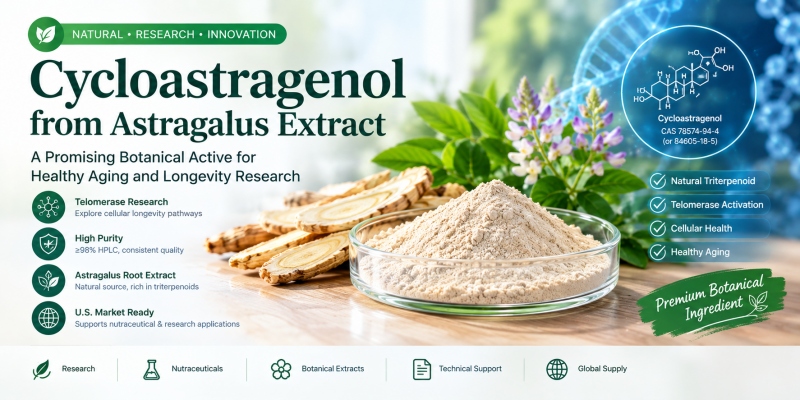
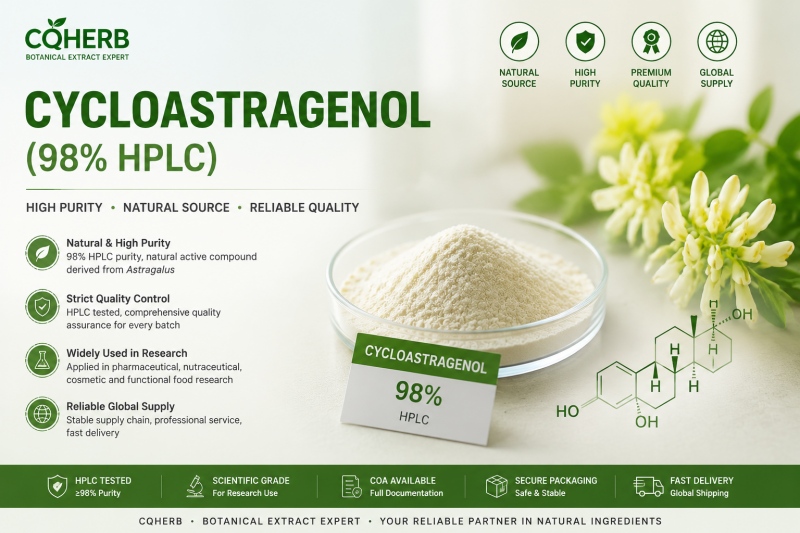
    Cycloastragenol Ultimate Guide (2026) Everything You Need to Know About Cycloastragenol (CAG): Benefits, Manufacturing, Specifications, Applications & Buying Guide Author: CQHERB Technical Team Last Updated: July 2026 Estimated Reading Time: 18 Minutes What Is Cycloastragenol? Cycloastragenol (CAG) is a naturally occurring cycloartane-type triterpenoid aglycone derived from Astragalus membranaceus. It is most commonly obtained through the controlled hydrolysis or biotransformation of Astragaloside IV, one of the major bioactive saponins found in Astragalus root. Due to its extremely low natural abundance, commercial-scale Cycloastragenol is rarely produced through direct extraction. Instead, modern manufacturing relies on carefully controlled conversion technologies to achieve high purity and batch consistency. Today, Cycloastragenol has become one of the most extensively researched compounds from Astragalus species, attracting attention in healthy aging research, nutraceutical development, cosmetic ingredient innovation, and natural product science. Quick Answer Cycloastragenol is a high-value triterpenoid compound derived from Astragalus species. Commercial products are typically manufactured by converting Astragaloside IV into Cycloastragenol through hydrolysis or biotransformation processes. High-purity Cycloastragenol (≥98% HPLC) is widely used for dietary supplement formulation, cosmetic ingredient development, and scientific research. Key Takeaways Cycloastragenol is a rare aglycone naturally derived from Astragalus species. Commercial production primarily relies on Astragaloside IV conversion rather than direct extraction. High-purity material (≥98% HPLC) is preferred for research and premium formulations. Manufacturing technology plays a critical role in purity, impurity profile, and production cost. Professional suppliers should provide comprehensive quality documentation, including COA, SDS, TDS, and HPLC chromatograms. Table of Contents What Is Cycloastragenol? Chemical Properties Natural Sources Manufacturing Process Cycloastragenol vs Astragaloside IV Scientific Research Interest Potential Applications CQHERB Product Specifications Quality Control How to Choose a Reliable Supplier Frequently Asked Questions Chemical Properties Property Value Product Name Cycloastragenol CAS No. 84605-18-5 Molecular Formula C30H50O5 Molecular Weight 490.72 Appearance White to Off-white Powder Test Method HPLC Standard Purity ≥98% HPLC Cycloastragenol belongs to the cycloartane triterpenoid family. Unlike Astragaloside IV, it does not contain sugar moieties, resulting in different physicochemical characteristics and formulation properties. Natural Sources of Cycloastragenol Cycloastragenol naturally occurs in several Astragalus species, including: Astragalus membranaceus Astragalus mongholicus Although naturally present, its concentration in the plant is extremely low. Direct extraction is therefore not considered commercially practical for large-scale production. Most high-purity Cycloastragenol available on the global market is produced through controlled conversion from Astragaloside IV. How Is Cycloastragenol Manufactured? Commercial Cycloastragenol production generally involves multiple controlled manufacturing steps to ensure purity and consistency. Step 1. Extraction of Astragalus Root Selected Astragalus roots are extracted to obtain crude saponins containing Astragaloside IV. Step 2. Purification of Astragaloside IV The extract undergoes multiple purification procedures to isolate high-purity Astragaloside IV. Step 3. Hydrolysis or Biotransformation Astragaloside IV is converted into Cycloastragenol using optimized hydrolysis or biotransformation technologies. Step 4. Purification The reaction product is purified through chromatographic separation and crystallization to remove impurities. Step 5. Quality Testing Each production batch is analyzed using HPLC and additional quality control methods before packaging. Typical Manufacturing Flow Astragalus Root ↓ Extraction ↓ Astragaloside IV ↓ Hydrolysis / Biotransformation ↓ Purification ↓ Crystallization ↓ Cycloastragenol ↓ HPLC Quality Control ↓ Packaging Cycloastragenol vs Astragaloside IV Feature Cycloastragenol Astragaloside IV Compound Type Aglycone Glycoside Sugar Groups No Yes Molecular Weight Lower Higher Manufacturing Conversion Product Direct Plant Component Market Value Higher Lower Purification Difficulty High Moderate Although closely related, Cycloastragenol and Astragaloside IV are chemically distinct compounds with different production processes and application characteristics. Why Has Cycloastragenol Attracted Scientific Interest? Over the past decade, Cycloastragenol has become an active topic in natural product and healthy aging research. Published studies have investigated its potential role in: Telomerase-related research Cellular senescence studies Oxidative stress models Immune system research Healthy aging research Skin biology studies Cellular metabolism It is important to note that much of the available evidence comes from laboratory and preclinical research. Product applications should always comply with local regulatory requirements. Potential Applications Dietary Supplements Cycloastragenol is commonly formulated into: Capsules Tablets Powder blends Softgels Functional nutrition products Cosmetic Ingredients Because of its botanical origin and ongoing scientific interest, Cycloastragenol has also attracted attention for cosmetic ingredient development, including: Anti-aging serums Facial creams Premium skincare products Eye care formulations Application suitability should be evaluated according to formulation requirements and local cosmetic regulations. CQHERB Cycloastragenol Specifications Item Specification Botanical Source Astragalus membranaceus Root Appearance White Powder Assay ≥98% HPLC Identification HPLC Loss on Drying ≤2.0% Heavy Metals Complies with Internal Specification Residual Solvents Controlled According to Applicable Standards Storage Store in a Cool, Dry Place Shelf Life 24 Months Quality Control At CQHERB, each production batch undergoes comprehensive quality evaluation to ensure consistency and traceability. Typical quality control procedures include: HPLC Assay Identity Verification Heavy Metal Analysis Residual Solvent Testing Microbiological Testing (where applicable) Stability Evaluation Batch Traceability Supporting documentation may include: Certificate of Analysis (COA) Technical Data Sheet (TDS) Safety Data Sheet (SDS/MSDS) HPLC Chromatogram Production Flow Chart Buyer Checklist: How to Select a Reliable Cycloastragenol Supplier When sourcing Cycloastragenol, buyers should consider several important factors: Is the manufacturing route clearly described? Is the product tested by HPLC? Are chromatograms available? Is batch consistency maintained? Can the supplier provide COA, TDS, and SDS? Does the supplier have experience serving international B2B customers? Is technical support available for formulation and documentation? Selecting a supplier with transparent manufacturing processes and complete quality documentation can help reduce sourcing risks and support long-term product development. Why Choose CQHERB? CQHERB specializes in high-purity botanical active ingredients for the global nutraceutical, cosmetic, and pharmaceutical industries. Our strengths include: Professional botanical extract manufacturing Strict batch quality control HPLC-tested high-purity products Complete export documentation Technical support for international customers Stable production capacity for long-term supply Frequently Asked Questions Is Cycloastragenol naturally extracted? Cycloastragenol naturally occurs in Astragalus species; however, its concentration is extremely low. Most commercial products are manufactured by converting Astragaloside IV through controlled processing. What purity is commonly available? Research-grade Cycloastragenol is typically supplied at purity levels of 98% HPLC or higher. What is the difference between Cycloastragenol and Astragaloside IV? Astragaloside IV is a glycoside, while Cycloastragenol is its corresponding aglycone after sugar groups have been removed. They differ in chemical structure, production process, and formulation characteristics. Which industries use Cycloastragenol? Cycloastragenol is commonly supplied for nutraceutical development, cosmetic ingredient research, and natural product research. What quality documents should a supplier provide? Professional suppliers typically provide a Certificate of Analysis (COA), Technical Data Sheet (TDS), Safety Data Sheet (SDS/MSDS), HPLC chromatograms, and batch traceability documentation. Conclusion Cycloastragenol has become one of the most recognized high-value compounds derived from Astragalus membranaceus. As research into healthy aging, botanical bioactives, and advanced nutraceutical ingredients continues to evolve, demand for high-quality Cycloastragenol is expected to grow across global markets. For manufacturers and product developers, selecting a supplier with robust manufacturing capabilities, transparent quality control, and complete technical documentation is essential for ensuring product consistency and regulatory compliance.   CQHERB is committed to supplying high-purity Cycloastragenol with strict quality management, comprehensive technical support, and reliable global B2B service.
    Read More
  • Cordycepin Production, Quality Standards & Industrial Applications
    Cordycepin Production, Quality Standards & Industrial Applications
    Jul 24, 2026
    Part 3 Cordycepin Production, Quality Standards & Industrial Applications From Cultivation to High-Purity Cordycepin (98%) Quick Summary The production of high-purity Cordycepin requires a combination of biological cultivation technology, extraction expertise, purification processes, and rigorous analytical testing. Unlike simple botanical extracts, 98% Cordycepin represents a highly standardized single compound that requires precise control throughout the entire manufacturing process. For global buyers, evaluating Cordycepin quality involves more than checking purity percentage. A reliable assessment should include raw material traceability, production technology, analytical methods, HPLC chromatograms, COA documentation, residual solvent testing, and batch consistency. As demand for standardized natural compounds continues to grow, high-purity Cordycepin has become increasingly important across scientific research, biotechnology, nutraceutical development, functional ingredients, and other emerging applications. 6. How Is High-Purity Cordycepin (98%) Produced? Overview of Commercial Production Commercial Cordycepin production has evolved significantly from traditional fungal extraction methods toward more controlled and scalable manufacturing approaches. Today, high-purity Cordycepin is generally obtained from cultivated Cordyceps militaris through a combination of: Controlled cultivation Fermentation technology Extraction optimization Purification processes Analytical verification The goal of production is not only to achieve high purity but also to ensure: Consistent quality Reliable supply Batch reproducibility Traceable manufacturing records Main Production Process of Cordycepin 1. Strain Selection and Cultivation The production process begins with carefully selected Cordyceps militaris strains. Important factors include: Growth characteristics Cordycepin production capability Cultivation stability Microbial control Compared with wild fungal resources, cultivated strains provide better control over raw material quality and production consistency. 2. Cultivation and Fermentation Modern production may utilize controlled cultivation systems or fermentation technologies designed to optimize biomass growth and target compound production. Key parameters include: Temperature control Nutrient composition Fermentation conditions Cultivation time Environmental monitoring Controlled production conditions help improve reproducibility between different batches. 3. Extraction Process After cultivation, the biomass undergoes extraction to obtain Cordycepin-containing fractions. Extraction parameters may influence: Extraction efficiency Compound stability Impurity profile Downstream purification requirements A well-designed extraction process is essential for maintaining product quality. 4. Purification and Refinement Crude extracts contain multiple natural compounds. Therefore, additional purification steps are required to obtain high-purity Cordycepin. Typical purification stages include: Separation of unwanted components Concentration Purification Crystallization Drying The final objective is achieving a standardized Cordycepin product meeting the required purity specification. 5. Quality Testing and Release Before shipment, each batch should undergo analytical verification. Typical quality evaluation includes: Test Item Purpose HPLC Purity Determine Cordycepin content Identity Testing Confirm compound identity Appearance Visual quality evaluation Moisture Stability assessment Residual Solvents Safety evaluation Heavy Metals Contaminant control Microbiological Testing Quality assurance   CQHERB Technical Insight For high-purity botanical compounds, manufacturing capability is not determined only by extraction technology. A qualified supplier should have a complete quality management approach covering raw materials, production control, analytical verification, documentation, and customer technical support. For Cordycepin 98%, analytical transparency is especially important because purity alone does not fully describe product quality. Supporting documentation such as HPLC chromatograms, specifications, and batch records provides greater confidence for international buyers. 7. Understanding Cordycepin Quality Standards Why Is Purity Important? Purity is one of the most commonly evaluated parameters when purchasing Cordycepin. A product labeled as: Cordycepin 50% Cordycepin 90% Cordycepin 98% represents different levels of refinement and different application requirements. High-purity Cordycepin (98%) is typically selected when users require: Defined chemical composition Analytical consistency Research reproducibility Standardized formulation materials Key Quality Parameters for 98% Cordycepin 1. HPLC Purity High-Performance Liquid Chromatography (HPLC) is one of the most widely used methods for determining Cordycepin purity. A typical HPLC report provides: Retention time Peak identification Purity percentage Chromatographic profile For buyers, reviewing the HPLC chromatogram is an important step in supplier evaluation. 2. Identity Confirmation Identity testing ensures that the material supplied is truly Cordycepin. Common analytical approaches include: HPLC comparison LC-MS NMR analysis 3. Residual Solvent Testing Depending on the production process, residual solvent analysis may be required to verify compliance with applicable standards. 4. Heavy Metals and Microbiological Control Quality-focused suppliers should monitor: Lead Arsenic Mercury Cadmium as well as microbiological parameters when applicable. Buyer Checklist: How to Evaluate Cordycepin Quality Before purchasing, buyers should consider: ✅ Is HPLC purity clearly provided? ✅ Is a COA available? ✅ Is the manufacturing source transparent? ✅ Are analytical methods documented? ✅ Is batch consistency demonstrated? ✅ Are technical documents available? Recommended supplier documents: COA Specification Sheet HPLC Chromatogram MSDS/SDS Technical Data Sheet 8. Industrial Applications of High-Purity Cordycepin Research Applications Cordycepin is widely used as a research compound in areas including: Natural product chemistry Molecular biology Biotechnology research Analytical studies Because purified Cordycepin provides a defined chemical structure, it is valuable for laboratory studies requiring standardized materials. Nutraceutical Ingredient Development The growing consumer interest in mushroom-derived ingredients has increased demand for standardized Cordyceps-related compounds. Compared with general mushroom powders, purified Cordycepin offers manufacturers a more clearly defined ingredient profile. Applications may include: Ingredient research Formula development Standardization studies Functional Food Research Cordycepin is also studied within the broader field of functional food ingredients derived from natural sources. Manufacturers evaluating Cordycepin typically focus on: Ingredient identity Quality consistency Regulatory requirements Documentation support Cosmetic Ingredient Research Natural compounds derived from fungi and botanical sources have attracted increasing attention in cosmetic science. Cordycepin-related research continues to be explored within the broader natural ingredient research field. For cosmetic developers, important considerations include: Purity Stability Compatibility Safety documentation Industry Insight The market trend is moving from traditional mushroom extracts toward standardized natural compounds with clearly defined chemical identities. This shift creates increasing demand for ingredients such as: Cordycepin Cordyceps marker compounds Botanical monomers High-purity research materials Companies that can provide both product quality and technical documentation will have stronger advantages in the global ingredient supply chain. 9. How to Choose a Reliable Cordycepin Supplier? Choosing a supplier involves more than comparing prices. A professional evaluation should consider: Manufacturing Capability Reliable suppliers should understand: Raw material sourcing Extraction technology Purification processes Quality control procedures Documentation Support International buyers commonly require: COA Specification SDS Technical documents Analytical reports Quality Consistency A long-term supplier should demonstrate: Stable production Repeatable specifications Reliable communication Technical support CQHERB Buyer Tips When evaluating Cordycepin suppliers, buyers should focus on: 1. Product authenticity Confirm identity and purity through analytical documents. 2. Manufacturing transparency Understand whether the supplier controls production or only distributes products. 3. Technical support A professional supplier should be able to answer questions regarding: Production Testing Storage Documentation 4. Long-term cooperation ability Stable supply capability is especially important for commercial projects. Section Summary High-purity Cordycepin production requires a combination of cultivation expertise, purification technology, and rigorous quality control. For international buyers, selecting a reliable supplier involves evaluating not only purity but also analytical documentation, manufacturing capability, and long-term supply reliability. As the global market continues to move toward standardized botanical ingredients, Cordycepin represents an important example of how natural compounds can be transformed into high-quality industrial materials.
    Read More
  • Why Is Cordycepin Receiving Increasing Scientific Attention? Structure, Sources & Research Overview (2026)
    Why Is Cordycepin Receiving Increasing Scientific Attention? Structure, Sources & Research Overview (2026)
    Jul 21, 2026
    Understanding Cordycepin: Why It Has Become One of the Most Important Bioactive Compounds from Cordyceps militaris Quick Summary The growing interest in Cordycepin is driven not only by scientific research but also by advances in cultivation technology, fermentation processes, analytical methods, and the increasing demand for standardized botanical ingredients. Today, high-purity Cordycepin has become an important research material and industrial ingredient because it combines a well-defined molecular structure with reproducible quality and scalable production. 2. Why Has Cordycepin Become One of the Most Studied Natural Compounds? Over the past two decades, Cordycepin has evolved from a relatively specialized natural compound into one of the most recognized bioactive constituents derived from Cordyceps militaris. This transformation reflects broader developments in biotechnology, analytical chemistry, and the global botanical ingredients industry. Unlike many botanical extracts that consist of complex mixtures of naturally occurring compounds, Cordycepin can be isolated, purified, and characterized as a single molecule. This allows researchers and manufacturers to work with a material whose identity and purity can be consistently verified using established analytical methods such as High-Performance Liquid Chromatography (HPLC). As scientific interest in standardized botanical compounds continues to expand, Cordycepin has become increasingly important in natural product chemistry, biotechnology, formulation development, food science, cosmetic ingredient research, and laboratory applications. Rather than being driven by a single discovery, the growing attention surrounding Cordycepin is the result of several long-term trends that continue to shape the botanical extract industry. Four Key Factors Driving Global Interest 1. Advances in Cultivation and Fermentation Technology Modern cultivation systems for Cordyceps militaris have significantly improved production efficiency and consistency. Controlled fermentation environments enable manufacturers to obtain reliable raw materials while supporting scalable commercial production. 2. Demand for Standardized Botanical Ingredients Global manufacturers increasingly prefer ingredients with clearly defined specifications, traceable production processes, and comprehensive analytical documentation. High-purity Cordycepin aligns well with these expectations. 3. Progress in Analytical Technologies Analytical techniques such as HPLC, LC-MS, and NMR have made it possible to accurately identify, quantify, and verify Cordycepin. These tools support product standardization and improve confidence in quality evaluation. 4. Expanding Scientific Research Research involving Cordycepin now spans multiple scientific disciplines, contributing to a growing body of literature and increasing demand for high-quality research materials. Why Do Researchers Prefer High-Purity Cordycepin? For many scientific and industrial applications, consistency is just as important as purity. High-purity Cordycepin (typically ≥98% by HPLC) helps minimize variability between experiments and supports reliable analytical results. Researchers often prefer standardized materials because they provide: Clearly defined chemical identity High batch-to-batch consistency Improved analytical reproducibility Easier formulation development Better traceability throughout the supply chain Comprehensive technical documentation These characteristics make high-purity Cordycepin particularly suitable for laboratories, formulation scientists, and manufacturers requiring reproducible materials. Scientific Milestones in Cordycepin Development Period Development 1950s Initial identification of Cordycepin from fungi belonging to the Cordyceps genus 1980s–1990s Improvements in isolation and analytical characterization Early 2000s Expansion of cultivation techniques for Cordyceps militaris 2010s Advances in submerged fermentation and purification technologies Today Commercial availability of standardized high-purity Cordycepin for research and industrial applications This progression illustrates how advances in biotechnology and quality control have transformed Cordycepin into a widely recognized botanical ingredient. CQHERB Technical Insight From a manufacturing perspective, the commercial success of Cordycepin depends not only on its natural origin but also on the ability to produce it consistently. Controlled cultivation, optimized fermentation, and rigorous purification are essential for achieving high purity and reliable batch-to-batch quality. Comprehensive analytical testing—including HPLC purity, identity confirmation, residual solvents, heavy metals, and microbiological limits—provides a more complete evaluation than purity alone. Industry Insight The botanical ingredients industry is moving toward well-characterized compounds supported by transparent production processes and standardized specifications. Cordycepin reflects this broader trend, as manufacturers and researchers increasingly prioritize reproducibility, traceability, and technical documentation when selecting botanical ingredients. Section Summary The growing importance of Cordycepin is driven by advances in biotechnology, analytical science, and the demand for standardized botanical ingredients. Its defined molecular identity, scalable production, and reproducible quality have made it a valuable material for research and industrial development. 3. Understanding the Molecular Structure of Cordycepin What Makes Cordycepin Structurally Unique? Cordycepin, also known as 3'-Deoxyadenosine, belongs to the purine nucleoside family. It shares a close structural relationship with adenosine but differs in one important aspect: the hydroxyl (-OH) group at the 3' position of the ribose sugar is absent. Although this modification appears minor, it distinguishes Cordycepin as a unique naturally occurring nucleoside analog and forms the basis for its extensive investigation in natural product chemistry and molecular research. Basic Chemical Information Property Value Chemical Name Cordycepin Synonym 3'-Deoxyadenosine CAS Number 73-03-0 Molecular Formula C₁₀H₁₃N₅O₃ Molecular Weight 251.24 g/mol Appearance White to off-white crystalline powder Typical Commercial Purity ≥98% (HPLC) Cordycepin vs. Adenosine Feature Adenosine Cordycepin Chemical Family Purine nucleoside Purine nucleoside analog 3' Hydroxyl Group Present Absent Natural Occurrence Widely distributed in living organisms Primarily associated with Cordyceps militaris This comparison highlights the structural distinction that has made Cordycepin a focus of scientific investigation. Why Do Physicochemical Properties Matter? Understanding physicochemical properties is essential because they influence: Analytical testing Formulation compatibility Storage conditions Manufacturing consistency Product stability Quality control procedures Rather than serving only as technical specifications, these properties help manufacturers and researchers maintain consistent product performance throughout production and application. Key Definitions Cordycepin – A naturally occurring nucleoside analog (3'-Deoxyadenosine) primarily obtained from Cordyceps militaris. Nucleoside – A molecule consisting of a nitrogenous base linked to a sugar, serving as a fundamental component in many biological systems. HPLC – High-Performance Liquid Chromatography, an analytical technique widely used to verify identity and purity. Purity – The proportion of the target compound relative to total detectable components, commonly expressed as a percentage determined by validated analytical methods. Section Summary Cordycepin possesses a clearly defined molecular structure that distinguishes it from adenosine and supports accurate analytical characterization. These characteristics contribute to its value as a standardized botanical compound. 4. Where Does Commercial Cordycepin Come From? One of the most common misconceptions is that commercial Cordycepin is obtained directly from wild Cordyceps sinensis. In reality, the vast majority of high-purity Cordycepin available today is produced from cultivated Cordyceps militaris. Cultivated production offers significant advantages over wild resources, including greater sustainability, improved quality consistency, and better traceability throughout the manufacturing process. Why Is Cordyceps militaris the Preferred Source? Compared with wild fungal resources, cultivated Cordyceps militaris provides: Controlled cultivation conditions Stable raw material supply Better batch consistency Higher production efficiency Compatibility with industrial fermentation Sustainable resource utilization These advantages have made Cordyceps militaris the preferred commercial source for standardized Cordycepin production. From Mushroom to High-Purity Cordycepin Commercial production generally involves the following stages: Strain selection Controlled cultivation or submerged fermentation Biomass harvesting Extraction Purification Chromatographic separation Crystallization HPLC quality verification Packaging Each stage contributes to the production of a standardized ingredient with defined specifications and reproducible quality. CQHERB Technical Insight A reliable Cordycepin supplier should be able to provide not only a high-purity product but also comprehensive technical documentation, including COA, HPLC chromatograms, specifications, residual solvent information, and other quality records that support traceability and batch consistency. Section Summary   Modern commercial Cordycepin is primarily produced from cultivated Cordyceps militaris using controlled cultivation, purification, and analytical verification. This production approach supports sustainability, standardized quality, and reliable supply for research and industrial applications.
    Read More
  • The Ultimate Guide to Cordycepin (98%) in 2026
    The Ultimate Guide to Cordycepin (98%) in 2026
    Jul 20, 2026
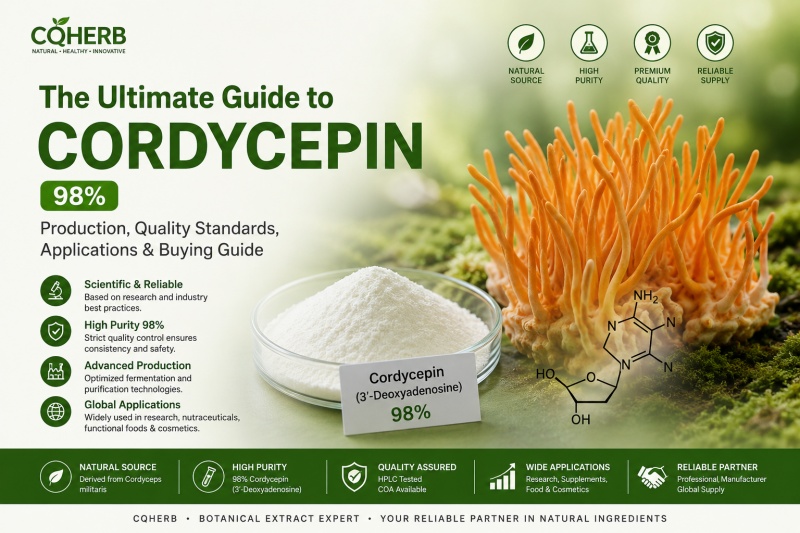
    Cordycepin (98%) Ultimate Guide Production • Quality Standards • Scientific Research • Industry Applications • Supplier Selection Building Reliable Knowledge for Researchers, Manufacturers, and Global Buyers Cordycepin (3'-Deoxyadenosine) is one of the most extensively studied bioactive compounds naturally found in Cordyceps militaris. With increasing interest from the nutraceutical, functional food, cosmetic, and scientific research sectors, high-purity Cordycepin has become an important ingredient for laboratories and manufacturers seeking standardized, well-characterized botanical compounds. This guide summarizes current scientific knowledge and industry practices surrounding 98% Cordycepin, including its natural sources, production technologies, physicochemical characteristics, quality evaluation, and purchasing considerations. CTA Looking for a reliable manufacturer of high-purity Cordycepin? Request Technical Documents COA | Specification | HPLC Chromatogram | MSDS | Sample Availability Quick Answer What Is Cordycepin? Cordycepin (CAS No. 73-03-0), also known as 3'-Deoxyadenosine, is a naturally occurring nucleoside analog first isolated from species within the Cordyceps genus. Today, it is most commonly produced from cultivated Cordyceps militaris through optimized fermentation and purification technologies, enabling the manufacture of high-purity materials suitable for scientific research and industrial applications. Because of its distinctive chemical structure, Cordycepin has attracted extensive attention in biochemical, pharmacological, and food science research. Researchers have investigated its physicochemical characteristics, biological interactions, and potential applications in areas such as nutraceutical development, functional food ingredients, cosmetic formulations, and laboratory studies. While research is active and expanding, the practical use of Cordycepin should always be evaluated within the relevant regulatory framework and intended application. Commercially, Cordycepin is available in multiple purity grades. High-purity 98% Cordycepin is generally selected for research institutions, formulation development, analytical laboratories, and manufacturers requiring standardized quality and batch-to-batch consistency. Quality assessment typically includes HPLC purity, identity testing, residual solvent analysis, heavy metals, microbiological limits, and other specifications depending on the intended use. As global demand for standardized botanical ingredients continues to grow, understanding how Cordycepin is produced, characterized, and evaluated has become increasingly important for researchers, product developers, and procurement professionals. Key Takeaways Cordycepin is a naturally occurring nucleoside analog known chemically as 3'-Deoxyadenosine. It is primarily associated with Cordyceps militaris and is commonly obtained through controlled cultivation and purification processes. High-purity (98%) Cordycepin is widely used in scientific research and formulation development where standardized quality is essential. Quality evaluation typically includes HPLC purity, identity confirmation, residual solvents, heavy metals, and microbiological testing. Production technology has evolved from simple extraction toward optimized fermentation and downstream purification. Different application sectors require different quality specifications and documentation. Reliable suppliers should provide comprehensive technical documents such as COA, specifications, chromatograms, and safety data sheets. Understanding stability and storage conditions is important for maintaining product quality. Scientific literature on Cordycepin continues to expand across multiple research disciplines. Selecting a qualified manufacturer can help improve consistency, traceability, and technical support. Table of Contents What Is Cordycepin? Why Has Cordycepin Received Increasing Scientific Attention? Chemical Structure and Physicochemical Properties Natural Sources of Cordycepin How Is High-Purity Cordycepin Produced? Quality Standards and Analytical Methods Applications in Research and Industry How to Evaluate Cordycepin Quality Buying Guide for Global Manufacturers Frequently Asked Questions Scientific References 1. What Is Cordycepin? Cordycepin is a naturally occurring nucleoside analog chemically identified as 3'-Deoxyadenosine. Structurally, it is closely related to adenosine, differing by the absence of the hydroxyl group at the 3' position of the ribose sugar. This subtle structural variation has made Cordycepin an important subject of investigation across multiple scientific disciplines, including natural product chemistry, molecular biology, biotechnology, and food science. Originally identified from fungi belonging to the Cordyceps genus, Cordycepin is now primarily associated with Cordyceps militaris, a cultivated medicinal mushroom widely recognized as a commercially sustainable source of this compound. Advances in cultivation techniques and fermentation technologies have significantly improved production efficiency, enabling the availability of high-purity Cordycepin for research and industrial use. Unlike crude mushroom powders or standard mushroom extracts, purified Cordycepin represents a single, chemically characterized compound. This distinction is particularly important for analytical laboratories, formulation scientists, and manufacturers who require precise control over ingredient identity, purity, and batch consistency. Today, high-purity Cordycepin is supplied to universities, research institutes, dietary supplement developers, cosmetic manufacturers, and biotechnology companies worldwide. As interest in standardized botanical ingredients continues to grow, Cordycepin has become one of the most recognized marker compounds derived from Cordyceps militaris. Definition Cordycepin (3'-Deoxyadenosine) is a naturally occurring nucleoside analog isolated primarily from Cordyceps militaris. Commercial high-purity Cordycepin is produced through controlled cultivation, fermentation, extraction, and purification processes and is widely used as a standardized research material and industrial botanical ingredient. CQHERB Technical Insight One common misunderstanding in the market is treating Cordyceps militaris extract and 98% Cordycepin as interchangeable products. In reality, they serve different purposes and are manufactured to different quality specifications. A Cordyceps militaris extract is a complex botanical preparation containing multiple naturally occurring constituents, with Cordycepin representing only one of many compounds. By contrast, 98% Cordycepin is a highly purified single compound that undergoes additional separation and purification steps to achieve a standardized purity level. For applications requiring precise formulation, analytical testing, or reproducible research conditions, high-purity Cordycepin is generally preferred because it offers greater consistency and more clearly defined quality attributes than a conventional mushroom extract. Industry Insight In recent years, global interest in standardized mushroom-derived ingredients has shifted from broad-spectrum extracts toward well-characterized marker compounds with defined specifications. This trend reflects the increasing demand from research institutions and manufacturers for ingredients that provide consistent analytical data, traceable production processes, and comprehensive quality documentation. As production technologies continue to improve, high-purity botanical monomers such as Cordycepin are expected to play an increasingly important role in product development, quality control, and scientific research. Summary   Cordycepin is more than a naturally occurring constituent of Cordyceps militaris—it is a well-characterized botanical compound with defined chemical identity, standardized quality requirements, and growing importance in research and industrial development. Understanding its origin, structure, and production forms the foundation for evaluating its quality and appropriate applications.
    Read More
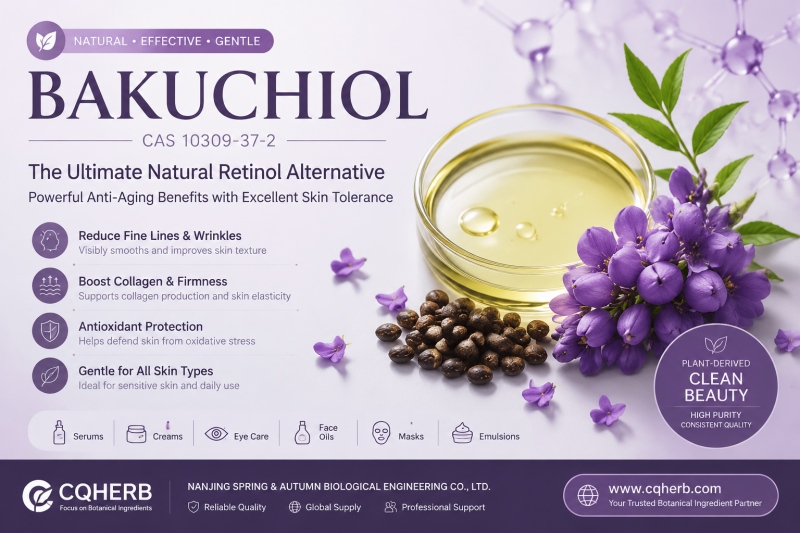
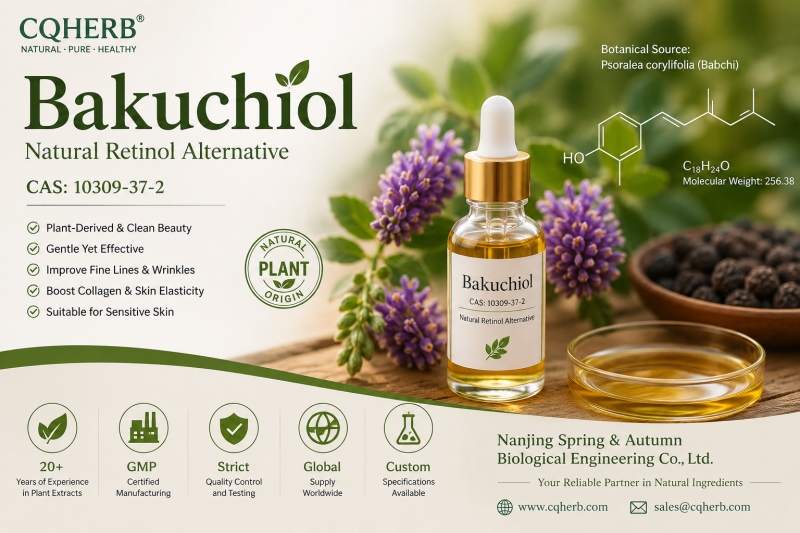
  • Bakuchiol (CAS 10309-37-2): Benefits, Applications, Scientific Research & Supplier Selection Guide (2026)
    Bakuchiol (CAS 10309-37-2): Benefits, Applications, Scientific Research & Supplier Selection Guide (2026)
    Jul 14, 2026
    Bakuchiol (CAS 10309-37-2) Ultimate Guide (2026) Part 3: Benefits, Scientific Research, Applications, Formulation Guide & Supplier Selection 6. Benefits of Bakuchiol for Skin Bakuchiol has attracted global attention because it delivers a broad range of cosmetic benefits while maintaining excellent skin tolerance. Unlike traditional retinoids, which often cause irritation in sensitive users, Bakuchiol is widely regarded as a gentler yet highly effective botanical active ingredient. Below are its most important scientifically supported cosmetic benefits. 6.1 Anti-Aging Support One of the primary reasons Bakuchiol is widely used in cosmetic formulations is its ability to help reduce visible signs of skin aging. With age, skin naturally loses collagen, elasticity, and firmness. This process leads to the formation of fine lines, wrinkles, and uneven texture. Bakuchiol is believed to support skin renewal pathways associated with collagen maintenance and extracellular matrix integrity. Regular use in skincare formulations has been associated with: Reduction in the appearance of fine lines Improved skin firmness Enhanced elasticity Smoother skin texture This makes Bakuchiol highly valuable in anti-aging serums and creams. 6.2 Helps Improve Skin Tone Appearance Bakuchiol is often used in formulations targeting uneven skin tone and dullness. Its antioxidant properties help reduce oxidative stress, which is one of the key contributors to uneven complexion and premature aging. Cosmetic users often report: Brighter-looking skin More even skin tone Improved overall radiance 6.3 Antioxidant Protection Environmental stressors such as UV radiation, pollution, and lifestyle factors generate free radicals in the skin. These unstable molecules accelerate visible aging. Bakuchiol exhibits antioxidant activity that helps neutralize free radicals, supporting the skin's natural defense system. This antioxidant function is particularly important in: Urban skincare formulations Day creams and serums Anti-pollution cosmetic products 6.4 Suitable for Sensitive Skin Formulations Unlike retinol, which may cause dryness, peeling, or irritation in some users, Bakuchiol is generally well tolerated by a wide range of skin types, including sensitive skin. This makes it especially attractive for: Sensitive skin products Pregnancy-safe skincare concepts (subject to formulation review) Daily-use anti-aging products 6.5 Supports Skin Barrier Function A healthy skin barrier is essential for hydration retention and protection against external irritants. Bakuchiol is frequently used in formulations designed to: Strengthen skin barrier function Improve moisture retention Reduce transepidermal water loss (TEWL) Global Market Trends for Bakuchiol The demand for Bakuchiol has increased steadily over the past decade, driven by the rapid growth of premium skincare, clean beauty, and plant-derived cosmetic ingredients. Several factors continue to support market expansion: Growing consumer preference for botanical alternatives to traditional cosmetic actives. Increased interest in vegan and naturally sourced skincare ingredients. Rising awareness of skin barrier health and sensitive skin care. Continuous innovation in multifunctional cosmetic formulations. Strong demand from premium skincare brands worldwide.   As more cosmetic companies invest in science-based botanical ingredients, Bakuchiol is expected to remain an important component of next-generation anti-aging formulations. 7. Scientific Research Overview Scientific interest in Bakuchiol has increased significantly over the past decade. Multiple in vitro and clinical studies have investigated its cosmetic and dermatological potential. 7.1 Clinical Observations Several comparative studies have evaluated Bakuchiol against retinol in cosmetic applications. While their chemical structures differ, both ingredients have demonstrated similar effects in improving visible signs of skin aging. Key observations include: Improvement in wrinkle appearance Enhanced skin elasticity Better skin smoothness Lower incidence of irritation compared to retinol 7.2 In Vitro Studies Laboratory studies suggest that Bakuchiol may influence several cellular pathways related to: Collagen production Cell renewal Oxidative stress response Inflammatory signaling modulation These mechanisms help explain its broad cosmetic functionality. 7.3 Cosmetic Safety Profile One of Bakuchiol's strongest advantages is its favorable safety profile in cosmetic applications. Unlike some synthetic retinoids, Bakuchiol is generally associated with: Low irritation potential Good skin compatibility Suitable for long-term use formulations However, as with any active ingredient, formulation design and concentration are important factors in final product safety and performance. 8. Cosmetic Applications of Bakuchiol Bakuchiol is a highly versatile cosmetic ingredient that can be used across multiple product categories. 8.1 Facial Care Products Bakuchiol is widely used in: Anti-aging serums Facial creams Eye creams Overnight repair treatments Its ability to support skin renewal makes it especially suitable for premium facial care products. 8.2 Clean Beauty Formulations Due to increasing consumer demand for natural and plant-derived ingredients, Bakuchiol is frequently included in: Vegan skincare products Clean beauty formulations Natural cosmetic lines 8.3 Sensitive Skin Products Because of its good tolerability, Bakuchiol is often selected for: Gentle anti-aging creams Fragrance-free skincare products Dermatology-focused formulations 8.4 Oil-Based Skincare Systems Bakuchiol is oil-soluble, making it ideal for: Facial oils Oil serums Emulsion-based formulations It integrates well with plant oils such as: Jojoba oil Squalane Argan oil 9. Formulation Guide for Cosmetic Developers For cosmetic formulators, understanding how to properly use Bakuchiol is essential to ensure product stability and performance. 9.1 Recommended Usage Level In most cosmetic formulations, Bakuchiol is typically used at: 0.5% – 2.0% (depending on product type and performance requirements) Higher concentrations may be used in specialized formulations under technical guidance. 9.2 Stability Considerations Bakuchiol is relatively stable compared to some retinoids, but it is still sensitive to: Strong light exposure Excessive heat Oxidative environments Recommended formulation practices include: Use of antioxidant systems (e.g., Vitamin E) Air-tight packaging Opaque or UV-protective containers 9.3 Compatibility with Other Ingredients Bakuchiol shows good compatibility with a wide range of cosmetic actives, including: Niacinamide Hyaluronic acid Peptides Ceramides Plant oils Botanical extracts This makes it highly suitable for multifunctional skincare formulations. 9.4 Formulation Types Bakuchiol can be incorporated into: Oil-based serums Emulsions (O/W, W/O systems) Creams and lotions Anhydrous formulations Expert Insights From our experience working with cosmetic manufacturers and formulation teams, successful Bakuchiol products depend on more than ingredient purity alone. Professional formulators typically evaluate: Batch-to-batch consistency Oxidation stability Documentation quality Compatibility with other active ingredients Reliable long-term supply   Selecting a qualified supplier with comprehensive technical support can significantly reduce formulation risks and improve product consistency throughout commercial production. Buyer Tips: What to Look for When Purchasing Bakuchiol Purchasing managers should evaluate Bakuchiol suppliers using multiple quality indicators rather than focusing solely on price. Important evaluation criteria include: Verified HPLC purity Stable production capacity Complete technical documentation Regulatory support Batch consistency Professional technical communication Sample availability Flexible packaging options A reliable supplier can help streamline product development while reducing long-term quality risks.   10. How to Choose a Reliable Bakuchiol Supplier For cosmetic brands and distributors, supplier selection is a critical factor that directly impacts product quality and market success. 10.1 Key Quality Criteria When evaluating Bakuchiol suppliers, consider the following: Purity consistency (HPLC verified) Batch-to-batch stability Impurity profile control Documentation support (COA, TDS, MSDS) Production capability Supply chain stability 10.2 Documentation Requirements A reliable supplier should provide: Certificate of Analysis (COA) Technical Data Sheet (TDS) Safety Data Sheet (SDS/MSDS) HPLC chromatograms (if required) 10.3 Why Consistency Matters In cosmetic formulation, even small variations in raw material quality can significantly affect: Product stability Texture Color Active performance Therefore, consistent quality supply is more important than price alone. 11. Why Choose CQHERB Nanjing Spring & Autumn Biological Engineering Co., Ltd. (CQHERB) is a professional supplier of botanical extracts and cosmetic active ingredients. We focus on providing stable, high-quality ingredients for global cosmetic manufacturers and distributors. Our advantages include: Strict quality control systems Stable batch-to-batch consistency Comprehensive technical documentation (COA, TDS, MSDS) Flexible packaging solutions Export experience for global markets Technical support for formulation development We are committed to supporting cosmetic brands in developing high-performance, safe, and market-ready skincare products.   12.Why We Published This Guide At CQHERB, we regularly communicate with cosmetic manufacturers, formulation laboratories, distributors, and purchasing professionals from around the world. Many customers ask similar questions regarding Bakuchiol's properties, applications, formulation compatibility, and quality evaluation. To help answer these questions in one comprehensive resource, we created this guide based on publicly available scientific literature, industry knowledge, and our experience supplying botanical active ingredients to the global cosmetics market.   Our objective is to provide practical information that supports informed product development and responsible sourcing decisions.   13.Frequently Asked Questions Can Bakuchiol be combined with Niacinamide? Yes. Bakuchiol is commonly formulated with niacinamide to create multifunctional skincare products targeting skin tone, texture, and overall appearance. Can Bakuchiol be used in facial oils? Yes. Because Bakuchiol is oil-soluble, it is particularly suitable for facial oils, oil-based serums, and anhydrous skincare formulations. Is Bakuchiol suitable for sensitive skin? Bakuchiol is generally considered well tolerated and is widely used in formulations intended for sensitive skin. Product performance depends on the overall formulation and individual skin response. How should Bakuchiol be stored? Bakuchiol should be stored in a cool, dry environment away from direct sunlight and excessive heat to help maintain product stability. What technical documents are commonly available? Professional suppliers typically provide documentation such as a Certificate of Analysis (COA), Technical Data Sheet (TDS), and Safety Data Sheet (SDS/MSDS), with additional analytical information available when required.   Looking for a Reliable Bakuchiol Supplier? Choosing a high-quality Bakuchiol supplier is essential for developing stable, effective, and competitive skincare products. At CQHERB (Nanjing Spring & Autumn Biological Engineering Co., Ltd.), we provide cosmetic-grade Bakuchiol with consistent quality, comprehensive technical documentation, and responsive technical support for cosmetic manufacturers, distributors, and research organizations worldwide. Available support includes: Cosmetic-grade Bakuchiol Certificate of Analysis (COA) Technical Data Sheet (TDS) Safety Data Sheet (SDS/MSDS) Sample support for evaluation Flexible packaging options Global export experience   If you are developing new skincare products or sourcing Bakuchiol for commercial production, our team is ready to discuss your technical and sourcing requirements.  
    Read More
  • Botanical Source, Extraction Process, Physicochemical Properties & Mechanism of Action
    Botanical Source, Extraction Process, Physicochemical Properties & Mechanism of Action
    Jul 03, 2026
    Bakuchiol Ultimate Guide (2026) Part 2: Botanical Source, Extraction Process, Physicochemical Properties & Mechanism of Action Botanical Source of Bakuchiol Where Does Bakuchiol Come From? Bakuchiol is a naturally occurring meroterpene phenol primarily isolated from the seeds and leaves of Psoralea corylifolia L., a medicinal plant belonging to the Fabaceae family. Commonly known as Babchi, this botanical species has been used for centuries in traditional herbal medicine across China, India, and other parts of Asia. Historically, Psoralea corylifolia has been valued for supporting skin health and has appeared in numerous traditional herbal formulations. Modern phytochemical research later identified Bakuchiol as one of its major bioactive constituents, attracting significant interest from cosmetic scientists due to its favorable balance of efficacy and skin compatibility. Today, Bakuchiol is regarded as one of the most important botanical active ingredients used in premium anti-aging skincare products. Botanical Information Item Description Botanical Name Psoralea corylifolia L. Common Name Babchi Plant Family Fabaceae Plant Part Used Seeds (primary), Leaves Major Active Compound Bakuchiol Traditional Applications Herbal medicine and skin care Main Cultivation Regions China, India, Southeast Asia Why Is Psoralea corylifolia an Ideal Source? Compared with many botanical extracts that contain only trace amounts of active compounds, Psoralea corylifolia naturally contains a relatively high concentration of Bakuchiol. This makes it one of the most commercially viable plant sources for industrial production. Several factors contribute to the quality of Bakuchiol raw materials: Geographic origin of the plant Harvest season and maturity Drying and storage conditions Extraction technology Purification process Quality control during manufacturing For cosmetic manufacturers, the consistency of the botanical raw material is just as important as the final purity of Bakuchiol. Stable sourcing helps ensure batch-to-batch reproducibility, which is essential for large-scale formulation and product performance. How Is Bakuchiol Produced? From Botanical Material to Cosmetic Active Ingredient Commercial Bakuchiol production involves several carefully controlled steps designed to preserve the natural active compound while removing impurities. Although manufacturing processes may vary among producers, the overall workflow generally includes: Step 1 – Raw Material Selection High-quality Psoralea corylifolia seeds are selected based on botanical identification, moisture content, and quality standards. Step 2 – Extraction The dried botanical material is processed using appropriate extraction techniques to obtain the crude extract containing Bakuchiol and other naturally occurring constituents. Step 3 – Purification The crude extract undergoes multiple purification stages, such as solvent partitioning and chromatographic separation, to enrich the Bakuchiol content and reduce unwanted impurities. Step 4 – Refinement Further purification helps achieve the desired cosmetic-grade purity while maintaining product stability. Step 5 – Quality Verification Each production batch is typically evaluated using validated analytical methods, such as High-Performance Liquid Chromatography (HPLC), to verify identity, purity, and consistency. Typical Quality Control Parameters Reliable manufacturers generally evaluate several quality attributes before releasing Bakuchiol for commercial use. Parameter Typical Evaluation Appearance Visual inspection Identity HPLC Purity HPLC assay Residual Solvents According to applicable standards Heavy Metals ICP or equivalent methods Microbiological Quality Cosmetic quality requirements Storage Stability Long-term stability evaluation For cosmetic brands, comprehensive technical documentation—including a Certificate of Analysis (COA), Technical Data Sheet (TDS), and Safety Data Sheet (SDS/MSDS)—is valuable for formulation development and regulatory compliance. Physical and Chemical Properties Understanding the physicochemical characteristics of Bakuchiol is essential for successful formulation development. These properties influence ingredient compatibility, stability, processing conditions, and final product performance. Property Specification INCI Name Bakuchiol CAS Number 10309-37-2 Molecular Formula C18H24O Molecular Weight 256.38 g/mol Chemical Class Meroterpene Phenol Appearance Pale yellow to amber viscous liquid Odor Characteristic Solubility Soluble in oils, ethanol, and many cosmetic solvents Water Solubility Practically insoluble Storage Conditions Cool, dry, protected from light Shelf Life Typically 24 months under recommended conditions Formulation Characteristics Bakuchiol is compatible with a wide range of cosmetic ingredients, allowing formulators to develop multifunctional skincare products. It is commonly combined with: Niacinamide Ceramides Hyaluronic Acid Peptides Squalane Tocopherol (Vitamin E) Plant Oils Botanical Extracts This versatility enables the development of advanced formulations targeting multiple skin concerns simultaneously. How Does Bakuchiol Work? Mechanism of Action Although Bakuchiol is structurally different from retinoids, numerous studies suggest that it can influence several biological pathways involved in skin rejuvenation. Rather than acting as a vitamin A derivative, Bakuchiol appears to modulate cellular signaling associated with extracellular matrix maintenance, collagen synthesis, antioxidant defense, and skin barrier support. Current research indicates that Bakuchiol may contribute to healthier-looking skin through several complementary mechanisms. 1. Supports Collagen Production Collagen is one of the most important structural proteins responsible for maintaining skin firmness and elasticity. Natural collagen production gradually declines with age, contributing to wrinkles and skin laxity. Research suggests that Bakuchiol may promote the expression of genes involved in collagen synthesis, helping improve the appearance of aging skin. 2. Helps Reduce Oxidative Stress Daily exposure to ultraviolet radiation, environmental pollution, and other external stressors generates reactive oxygen species (ROS), which accelerate visible skin aging. Bakuchiol exhibits antioxidant activity that helps neutralize free radicals, supporting healthier skin and protecting cellular structures from oxidative damage. 3. Supports Skin Barrier Function A healthy skin barrier is essential for maintaining hydration and reducing sensitivity. Bakuchiol has been reported to help support barrier integrity, making it particularly attractive for formulations designed for dry or sensitive skin. 4. Improves Visible Skin Texture Regular use of Bakuchiol-containing skincare products has been associated with improvements in: Skin smoothness Skin firmness Elasticity Overall skin radiance Appearance of fine lines and wrinkles These benefits have contributed to its widespread adoption in anti-aging formulations. 5. Soothes the Skin Unlike many conventional retinoids, Bakuchiol is generally well tolerated. Its favorable skin compatibility makes it suitable for formulations intended for sensitive skin, helping cosmetic brands expand their product offerings to a broader consumer base. Expert Insight One of the key reasons behind Bakuchiol's rapid adoption is not that it is simply a "natural retinol." Instead, it offers formulators greater flexibility by combining anti-aging efficacy with improved tolerability. This allows brands to create products that appeal to consumers seeking high-performance skincare without the irritation commonly associated with traditional retinoids. For product developers, ingredient quality is equally important. Consistent purity, validated analytical testing, and stable manufacturing processes all contribute to predictable formulation performance and long-term product reliability. CQHERB Technical Note   At Nanjing Spring & Autumn Biological Engineering Co., Ltd. (CQHERB), Bakuchiol is supplied with strict batch quality control and comprehensive technical documentation to support cosmetic product development. Depending on customer requirements, we can provide COA, TDS, SDS/MSDS, chromatographic data, and customized packaging solutions. Our focus is on delivering reliable botanical active ingredients that help customers accelerate formulation development while maintaining consistent product quality.
    Read More
  • Bakuchiol (CAS 10309-37-2): The Ultimate Guide to Benefits, Applications, Retinol Comparison & Buying Guide (2026)
    Bakuchiol (CAS 10309-37-2): The Ultimate Guide to Benefits, Applications, Retinol Comparison & Buying Guide (2026)
    Jun 30, 2026
    Bakuchiol (CAS 10309-37-2): The Ultimate Guide to Benefits, Applications, Retinol Comparison & Buying Guide (2026) Natural Retinol Alternative for Next-Generation Cosmetic Formulations Improve Skin Texture • Support Collagen Production • Gentle for Sensitive Skin • Ideal for Premium Skincare Products Quick Answer Bakuchiol (CAS 10309-37-2) is a naturally occurring meroterpene extracted primarily from the seeds and leaves of Psoralea corylifolia (commonly known as Babchi). Over the past decade, it has become one of the most sought-after botanical active ingredients in the global cosmetic industry due to its ability to deliver retinol-like anti-aging benefits with significantly improved skin tolerance. Scientific studies indicate that Bakuchiol can help reduce the appearance of fine lines and wrinkles, improve skin elasticity, enhance skin firmness, and support collagen synthesis. Unlike traditional retinoids, Bakuchiol is generally well tolerated by sensitive skin and is less likely to cause redness, peeling, or irritation, making it a preferred choice for modern skincare formulations. Today, Bakuchiol is widely incorporated into anti-aging serums, facial creams, eye treatments, facial oils, masks, and clean beauty products. As consumer demand continues to shift toward plant-derived and sustainable cosmetic ingredients, Bakuchiol has become one of the fastest-growing active ingredients in premium skincare worldwide. Key Takeaways Naturally derived cosmetic active ingredient from Psoralea corylifolia. CAS Number: 10309-37-2. Recognized globally as a leading natural alternative to retinol. Supports collagen production and improves visible signs of skin aging. Provides antioxidant and soothing benefits for sensitive skin. Compatible with modern cosmetic ingredients such as niacinamide, peptides, ceramides, and hyaluronic acid. Widely used in clean beauty, vegan, and premium skincare formulations. Increasingly adopted by international cosmetic brands seeking plant-based anti-aging solutions. Available in high-purity cosmetic-grade specifications for formulation development and commercial production. Who Should Read This Guide? Whether you are a cosmetic formulator, skincare brand owner, ingredient distributor, purchasing manager, or research professional, this guide provides comprehensive and practical information about Bakuchiol. In this guide, you will learn: What Bakuchiol is and why it has become a popular cosmetic ingredient. How Bakuchiol differs from retinol. The latest scientific understanding of its anti-aging properties. Common cosmetic applications and formulation considerations. How to evaluate product quality and choose a reliable supplier. Frequently asked questions from cosmetic manufacturers and international buyers. Our goal is to provide a practical resource that supports both technical understanding and purchasing decisions. Why Is Bakuchiol Receiving Global Attention? The global skincare market has undergone a significant transformation over the past decade. Consumers are no longer satisfied with products that simply promise visible results—they increasingly seek ingredients that combine proven efficacy, excellent skin compatibility, and naturally derived origins. Retinol has long been regarded as the gold standard for anti-aging skincare. However, many consumers experience undesirable side effects such as dryness, redness, peeling, and increased photosensitivity, particularly those with sensitive or compromised skin barriers. These limitations have encouraged cosmetic researchers and formulators to search for botanical alternatives capable of delivering comparable cosmetic benefits with improved tolerability. Bakuchiol has emerged as one of the most promising answers to this demand. Although its chemical structure differs completely from vitamin A derivatives, numerous scientific investigations have shown that Bakuchiol can influence several biological pathways associated with skin renewal, collagen metabolism, and wrinkle reduction. This unique combination of efficacy and skin friendliness has positioned Bakuchiol as a preferred ingredient for modern anti-aging formulations. At the same time, the rapid growth of clean beauty, vegan cosmetics, and naturally derived skincare products has further accelerated the commercial adoption of Bakuchiol across North America, Europe, Japan, South Korea, and other major cosmetic markets. What Is Bakuchiol? Bakuchiol is a naturally occurring meroterpene phenol isolated primarily from the seeds and leaves of Psoralea corylifolia, a medicinal plant traditionally used in Asian herbal medicine for centuries. While the plant has a long history in traditional healthcare, Bakuchiol itself has gained widespread recognition only in recent years as scientific research has revealed its remarkable cosmetic potential. Unlike retinol, which belongs to the vitamin A family, Bakuchiol possesses an entirely different molecular structure. Nevertheless, modern biological studies suggest that it can regulate the expression of several genes involved in skin repair, extracellular matrix remodeling, and collagen production. This explains why many formulators describe Bakuchiol as a "natural retinol alternative," even though it is not chemically related to retinoids. Its excellent compatibility with sensitive skin, combined with antioxidant activity and broad formulation flexibility, has made Bakuchiol one of the most valuable plant-derived active ingredients in premium cosmetic formulations. Today, Bakuchiol is commonly found in: Anti-aging facial serums Firming creams Eye creams Moisturizers Facial oils Overnight repair treatments Premium clean beauty products Sensitive skin formulations Its versatility allows formulators to create effective skincare products for consumers seeking visible anti-aging benefits while avoiding many of the limitations associated with traditional retinoids. Chemical Identification Property Information Product Name Bakuchiol CAS Number 10309-37-2 Molecular Formula C18H24O Molecular Weight 256.38 g/mol Appearance Pale yellow to amber viscous liquid Botanical Source Psoralea corylifolia Seeds Solubility Soluble in oils, ethanol, and many cosmetic solvents Recommended Storage Store in a cool, dry place away from direct sunlight Shelf Life Typically 24 months under recommended storage conditions About CQHERB Nanjing Spring & Autumn Biological Engineering Co., Ltd. (CQHERB) specializes in the research, production, and global supply of high-quality botanical extracts and cosmetic active ingredients. With extensive experience serving cosmetic manufacturers, ingredient distributors, and research institutions worldwide, we are committed to providing reliable raw materials supported by comprehensive technical documentation and consistent quality. Our Bakuchiol is manufactured under strict quality management procedures to ensure excellent batch-to-batch consistency for formulation development and commercial production. Supporting documentation—including the Certificate of Analysis (COA), Technical Data Sheet (TDS), and Safety Data Sheet (SDS/MSDS)—is available upon request. We also offer flexible packaging options and customized supply solutions to meet the needs of global customers. Table of Contents   Botanical Source of Bakuchiol Extraction and Manufacturing Process Physical and Chemical Properties Mechanism of Action Scientific Research and Clinical Studies Benefits of Bakuchiol for Skin Cosmetic Applications Bakuchiol vs. Retinol: What's the Difference? Formulation Guide Safety and Stability How to Choose a Reliable Bakuchiol Supplier Frequently Asked Questions References    
    Read More
  • CQ HERB Cordycepin 98% Supplier & Manufacturer | Cordycepin CAS 73-03-0
    CQ HERB Cordycepin 98% Supplier & Manufacturer | Cordycepin CAS 73-03-0
    Jun 24, 2026
    CQ HERB Cordycepin 98% (CAS 73-03-0): High Purity Cordycepin Supplier & Manufacturer As interest in natural bioactive compounds continues to grow, Cordycepin (CAS 73-03-0) has become one of the most widely studied ingredients derived from Cordyceps militaris. CQ HERB is a professional supplier and manufacturer of high-purity Cordycepin, providing reliable ingredient solutions for nutraceutical, cosmetic, and scientific research applications worldwide. What Is Cordycepin? Cordycepin, also known as 3'-Deoxyadenosine, is a naturally occurring nucleoside compound primarily found in Cordyceps militaris, a medicinal mushroom that has been used and studied for centuries. Due to its unique chemical structure, Cordycepin has attracted increasing attention from researchers, product developers, and ingredient manufacturers. Product Information Item Specification Product Name Cordycepin CAS Number 73-03-0 Molecular Formula C10H13N5O3 Molecular Weight 251.24 Appearance White to Off-White Powder Purity 98% HPLC Source Cordyceps Militaris Brand CQ HERB About Cordyceps Militaris Cordyceps militaris is one of the most recognized medicinal fungi in the world and is considered an important natural source of Cordycepin. Compared with traditional fungal extracts, purified Cordycepin 98% offers greater consistency, standardized quality, and easier formulation for product developers. Today, Cordyceps militaris-derived ingredients are increasingly utilized in dietary supplements, nutraceutical products, and scientific research projects. Why Is Cordycepin Receiving Growing Attention? Researchers continue to investigate Cordycepin because of its unique chemical properties and natural origin. Current areas of scientific interest include: Natural nucleoside compounds Medicinal mushroom research Functional ingredient development Nutraceutical innovation Cosmetic ingredient exploration Biotechnology research As research progresses, Cordycepin remains one of the most important active compounds isolated from Cordyceps militaris. Applications of CQ HERB Cordycepin 98% Dietary Supplement Development Cordycepin is frequently evaluated as a high-value ingredient in dietary supplement formulations. Potential applications include: Capsules Tablets Powder blends Functional nutrition products Scientific Research High-purity Cordycepin is widely supplied for: Natural product research Mushroom-derived compound studies Analytical reference applications Biotechnology research projects Cosmetic Ingredient Development The cosmetic industry continues to explore naturally derived active ingredients. Cordycepin may be evaluated for use in: Premium skincare formulations Botanical cosmetic products Research-oriented cosmetic applications Why Choose CQ HERB Cordycepin? High Purity CQ HERB supplies Cordycepin 98% tested by HPLC to ensure product consistency and quality. Professional Manufacturing As a specialized botanical ingredient manufacturer, CQ HERB maintains strict production and quality control standards. Global Supply Capability We provide: COA Product Specifications Technical Documentation Batch Traceability Export Support Customer-Oriented Service CQ HERB works closely with customers worldwide to provide customized ingredient solutions and reliable supply support. Quality Standards at CQ HERB Quality is a core priority at CQ HERB. Our manufacturing and quality management process focuses on: Raw material verification Standardized production Analytical testing Batch consistency International documentation support These measures help ensure that customers receive dependable Cordycepin ingredients for their projects and formulations. How to Select a Reliable Cordycepin Supplier When sourcing Cordycepin bulk ingredients, buyers should evaluate suppliers based on: Product Quality HPLC purity verification Reliable specifications Stable supply capacity Manufacturing Experience Botanical extraction expertise Industry experience Quality management systems Technical Support COA availability Regulatory documents Responsive communication Choosing an experienced Cordycepin manufacturer can help streamline procurement and product development processes. Why Global Customers Choose CQ HERB CQ HERB specializes in botanical extracts, nutraceutical ingredients, and cosmetic raw materials. Our advantages include: Professional Cordycepin manufacturer International export experience Customized specifications Reliable quality control Dedicated customer support We are committed to helping customers develop innovative products based on high-quality natural ingredients. Frequently Asked Questions What is Cordycepin? Cordycepin is a naturally occurring nucleoside compound primarily derived from Cordyceps militaris. What is the CAS number of Cordycepin? The CAS number of Cordycepin is 73-03-0. What purity does CQ HERB offer? CQ HERB supplies high-purity Cordycepin 98% tested by HPLC. Is Cordycepin suitable for dietary supplement formulations? Cordycepin is commonly supplied as a raw material ingredient for nutraceutical and dietary supplement product development. Can CQ HERB provide technical documentation? Yes. We provide COA, specifications, and other technical documents upon request. Partner with CQ HERB If you are looking for a reliable Cordycepin supplier, Cordycepin manufacturer, or Cordyceps militaris extract specialist, CQ HERB is ready to support your sourcing and development needs. For quotations, specifications, and technical documentation, please contact CQ HERB through www.cqherb.com.
    Read More
  • CQ HERB Lupeol Supplier & Manufacturer | High Purity Lupeol CAS 545-47-1
    CQ HERB Lupeol Supplier & Manufacturer | High Purity Lupeol CAS 545-47-1
    Jun 12, 2026
    CQ HERB Lupeol (CAS 545-47-1): Trusted Botanical Ingredient Supplier for Global Industries As the global market for botanical active ingredients continues to expand, CQ HERB has become a trusted name in the supply of high-quality plant-derived compounds for nutraceutical, cosmetic, and research applications. One of our key products is Lupeol (CAS 545-47-1), a naturally occurring pentacyclic triterpene widely found in fruits, vegetables, and medicinal plants. With growing interest in natural-origin ingredients, Lupeol has gained attention from formulators and manufacturers worldwide. About CQ HERB CQ HERB is the international brand of Nanjing Spring & Autumn Biological Engineering Co., Ltd., a professional manufacturer and supplier of botanical extracts, nutraceutical ingredients, and cosmetic raw materials in China. Our website: www.cqherb.com CQ HERB focuses on: Botanical active ingredients Nutraceutical raw materials Cosmetic ingredients Plant extract manufacturing Custom ingredient solutions With years of export experience, CQ HERB serves customers in North America, Europe, Asia, and other international markets.   What Is Lupeol? Lupeol is a natural pentacyclic triterpene with the molecular formula C30H50O. It is commonly isolated from botanical sources such as mango peel, olive fruits, aloe species, cabbage, and other medicinal plants.   Basic Product Information Item Description Product Name Lupeol CAS Number 545-47-1 Molecular Formula C30H50O Molecular Weight 426.72 Appearance White to off-white powder Category Pentacyclic triterpene Applications Dietary supplements, cosmetics, research   CQ HERB Lupeol: Quality You Can Trust At CQ HERB, we provide high-purity Lupeol powder manufactured under strict quality control standards. Our Lupeol ingredient is suitable for use in dietary supplement development, cosmetic formulations, and scientific research applications. Why Choose CQ HERB as Your Lupeol Supplier? Professional Lupeol Manufacturer in China CQ HERB operates as a dedicated botanical extract factory with established production and quality management systems. Consistent Product Quality We provide: HPLC-tested Lupeol Certificate of Analysis (COA) Product specifications Batch traceability Microbiological and heavy metal testing Global Export Experience CQ HERB has extensive experience supplying botanical ingredients to international customers, supporting smooth communication, documentation, and logistics. Technical Support & Customization We support customers with: Technical documentation Customized purity specifications Application consultation Bulk supply solutions   Applications of CQ HERB Lupeol 1. Dietary Supplement Formulations Lupeol is increasingly explored as a plant-derived ingredient in nutraceutical and wellness formulations. It is commonly used in: Capsule products Tablet formulations Botanical blends Plant-based supplement systems CQ HERB supplies Lupeol as a raw material ingredient for product development and manufacturing use only. 2. Cosmetic & Personal Care Products The cosmetic industry continues to favor natural-origin active ingredients. CQ HERB Lupeol may be incorporated into: Skin care creams Facial serums Botanical cosmetic formulations Premium personal care products 3. Research & Development Lupeol is also supplied for laboratory and research purposes related to natural product chemistry and botanical ingredient studies.   CQ HERB Manufacturing Standards As a responsible botanical ingredient supplier, CQ HERB emphasizes: Raw material traceability Standardized extraction processes Analytical verification Stable supply capacity International documentation support Our goal is to provide reliable botanical ingredients that meet the expectations of global B2B customers.   Frequently Asked Questions Is CQ HERB a Lupeol manufacturer or trader? CQ HERB is a professional botanical extract manufacturer and supplier with production capabilities and international export experience.   What purity of Lupeol does CQ HERB supply? We can provide different purity specifications according to customer requirements. Please contact us for the latest specifications and quotations.   Can CQ HERB provide technical documents? Yes. We provide COA, specifications, analytical reports, and other technical documents for qualified customers.   What industries use Lupeol? Lupeol is mainly used in dietary supplements, cosmetics, nutraceuticals, and research applications.   Partner with CQ HERB If you are looking for a reliable Lupeol supplier, Lupeol manufacturer, or botanical ingredient factory in China, CQ HERB is ready to support your business with consistent quality and professional service. Contact CQ HERB Website: www.cqherb.com Company: Nanjing Spring & Autumn Biological Engineering Co., Ltd. Product: Lupeol (CAS 545-47-1) For quotations, specifications, and bulk supply inquiries, please contact our sales team through our website.
    Read More
  • Why Global Buyers Choose CQ Herb as Their Trusted Natural Compound Supplier
    Why Global Buyers Choose CQ Herb as Their Trusted Natural Compound Supplier
    Jun 03, 2026
    Why Global Buyers Choose CQ Herb as Their Trusted Natural Compound Supplier In today's rapidly evolving pharmaceutical, nutraceutical, cosmetic, and biotechnology industries, sourcing high-quality natural compounds has become more important than ever. Buyers are no longer looking for suppliers who simply provide products—they seek reliable partners capable of delivering consistent quality, technical expertise, and long-term support. This is where CQ Herb stands out. As a professional manufacturer and supplier of natural compounds, botanical extracts, and phytochemical ingredients, CQ Herb has become a trusted partner for customers worldwide. Who Is CQ Herb? CQ Herb is the international brand of Nanjing Spring & Autumn Biological Engineering Co., Ltd., a company dedicated to the research, development, production, and global distribution of high-value natural active ingredients. Our product portfolio includes: Natural compounds Herbal extracts Cosmetic active ingredients Pharmaceutical raw materials Functional food ingredients Customized plant-derived compounds Over the years, we have supplied customers across North America, Europe, Asia, and other international markets, supporting research institutions, ingredient distributors, pharmaceutical companies, and cosmetic manufacturers. Commitment to Quality Quality is the foundation of every successful partnership. At CQ Herb, we implement strict quality control procedures throughout the manufacturing process. Our quality management system includes: Raw material verification Production process monitoring HPLC analysis Purity testing Batch consistency evaluation Final product inspection For many products, we can provide: Certificate of Analysis (COA) HPLC Chromatograms Product Specifications MSDS Technical Data Sheets Our goal is to ensure that every batch delivered meets customer expectations and application requirements. Extensive Natural Compound Portfolio One of the key reasons global buyers choose CQ Herb is our extensive range of natural ingredients. Our product categories include: Flavonoids Examples include: Licochalcone A Glabridin Liquiritigenin Isoliquiritigenin Naringenin Saponins Examples include: Ginsenoside Rg1 Ginsenoside Rg3 Asiaticoside Cycloastragenol Derivatives Terpenoids Examples include: Oridonin Celastrol Arglabin Costunolide Specialized Botanical Actives Examples include: Geniposide Genipin Cordycepin Nobiletin Schisandrol A Our continuously expanding catalog allows customers to source multiple ingredients from a single reliable supplier. Supporting Cosmetic Innovation The cosmetic industry increasingly demands scientifically supported natural ingredients. CQ Herb supplies a variety of cosmetic-active compounds used in formulations targeting: Anti-aging Skin soothing Brightening Antioxidant protection Skin barrier support Ingredients such as Licochalcone A, Glabridin, and Bakuchiol have gained significant attention among cosmetic developers seeking naturally derived alternatives. Serving Pharmaceutical and Research Markets Many of our customers operate in pharmaceutical research, biotechnology, and academic laboratories. We understand the importance of: High purity Consistent specifications Reliable documentation Technical communication Timely delivery Our team works closely with customers to help identify suitable products and specifications for their development projects. Customized Solutions for Global Buyers Every project is different. To meet diverse market requirements, CQ Herb offers flexible solutions including: Customized purity levels Small-scale research quantities Bulk commercial quantities Product specification adjustments Technical documentation support Whether customers require grams for laboratory research or kilograms for industrial production, we strive to provide efficient and professional service. Global Service and Professional Communication Successful international business depends on clear communication and responsive support. CQ Herb is committed to: Fast inquiry responses Transparent quotations Technical assistance Export documentation support Long-term customer relationships We believe that trust is built through consistency, professionalism, and continuous improvement. Looking Toward the Future As demand for natural ingredients continues to grow worldwide, CQ Herb remains focused on expanding its product portfolio, strengthening quality systems, and supporting innovation across multiple industries. Our mission is simple: To provide high-quality natural compounds and dependable service to customers around the world. Partner with CQ Herb Whether you are searching for cosmetic active ingredients, pharmaceutical raw materials, botanical extracts, or specialized natural compounds, CQ Herb is ready to support your sourcing needs. Contact our team today to learn more about our products, technical capabilities, and customized solutions.
    Read More
  • 8-Prenylnaringenin (8-PN): Natural Phytoestrogen for Menopause & Women’s Health
    8-Prenylnaringenin (8-PN): Natural Phytoestrogen for Menopause & Women’s Health
    May 25, 2026
    8-Prenylnaringenin (8-PN): A Powerful Natural Phytoestrogen for Women's Health Applications Introduction As consumer demand for natural wellness solutions continues to grow, phytoestrogens have attracted increasing attention in the fields of women's health, nutraceuticals, and functional foods. Among these compounds, 8-Prenylnaringenin (8-PN) has emerged as one of the most potent naturally occurring phytoestrogens identified to date. Derived primarily from hops (Humulus lupulus), 8-Prenylnaringenin is gaining significant interest for its potential applications in menopausal support, hormonal balance, bone health, and healthy aging formulations. In this article, we explore the source, biological characteristics, market applications, and formulation potential of 8-Prenylnaringenin. What is 8-Prenylnaringenin? 8-Prenylnaringenin, commonly abbreviated as 8-PN, is a prenylated flavonoid naturally found in hops. It belongs to the flavanone class of polyphenolic compounds. Basic Information Product Name: 8-Prenylnaringenin CAS Number: 520-18-3 Molecular Formula: C20H20O5 Source: Hop Extract (Humulus lupulus) Appearance: Light yellow to yellow powder 8-PN is considered one of the most biologically active phytoestrogens due to its strong affinity for estrogen receptors, especially estrogen receptor alpha (ERα). Why is 8-Prenylnaringenin Important? In recent years, consumers have increasingly sought plant-based alternatives to synthetic hormone therapies. This trend has accelerated the development of natural ingredients targeting: Menopausal support Women's hormonal balance Healthy aging Bone health Emotional wellness Compared with many common phytoestrogens such as soy isoflavones, 8-Prenylnaringenin demonstrates significantly stronger estrogenic activity in laboratory studies. Because of this unique biological profile, 8-PN has become an important ingredient of interest in: Women's health supplements Menopause formulations Functional beverages Healthy aging products Botanical research Potential Applications of 8-Prenylnaringenin 1. Menopause Support One of the most widely discussed applications of 8-PN is its potential use in menopause-related formulations. As estrogen levels naturally decline during menopause, many women may experience symptoms such as: Hot flashes Night sweats Mood fluctuations Sleep disturbances Phytoestrogens are often explored as plant-derived ingredients that may help support hormonal balance during this stage of life. Due to its high phytoestrogenic activity, 8-PN has attracted growing attention in menopause-focused dietary supplements. 2. Women's Hormonal Balance 8-Prenylnaringenin is frequently studied for its interaction with estrogen receptors. For this reason, it is commonly positioned in formulations designed for: Female wellness Hormonal support Healthy aging for women Botanical balance products Many nutraceutical brands are now combining 8-PN with ingredients such as: Black Cohosh Soy Isoflavones Red Clover Extract Vitex Extract Collagen peptides to create comprehensive women's health formulations. 3. Bone Health Research Estrogen plays an important role in maintaining bone metabolism. Researchers have therefore shown increasing interest in the relationship between phytoestrogens and bone health support. Although further clinical research is still ongoing, 8-PN continues to be evaluated in scientific studies related to: Bone density maintenance Healthy aging Postmenopausal wellness 4. Functional Food and Beverage Applications As demand for functional nutrition grows, 8-Prenylnaringenin is also attracting interest in: Functional beverages Women's wellness drinks Botanical nutrition products Healthy aging formulas Its natural botanical origin aligns well with current clean-label and plant-based product trends. Different Specifications of 8-Prenylnaringenin To meet different formulation and application requirements, 8-PN is commonly available in multiple specifications. 0.2% 8-PN This specification is usually standardized from hop extract and is commonly used in: Functional foods Nutritional supplements Botanical blends It offers a cost-effective solution for general wellness formulations. 80% 8-PN This medium-to-high purity specification is suitable for: Advanced nutraceutical formulations Research applications Premium women's health products 98% 8-PN High-purity 98% HPLC grade 8-Prenylnaringenin is mainly used for: Scientific research High-end formulation development Analytical applications Pharmaceutical research This grade offers higher consistency and better formulation precision. Market Trends of 8-Prenylnaringenin The global women's health market has experienced rapid growth in recent years. Several trends are driving increased demand for ingredients such as 8-PN: Rising interest in healthy aging Growing preference for plant-based ingredients Expanding menopause wellness market Increased awareness of phytoestrogens Growth of personalized nutrition As a result, 8-Prenylnaringenin is gradually moving from a niche research ingredient toward broader commercial applications. Formulation Considerations When developing products containing 8-Prenylnaringenin, formulators typically consider factors such as: Solubility Stability Dosage strategy Compatibility with other phytoactives Regulatory requirements in target markets Because 8-PN is a highly active compound, professional formulation evaluation is recommended for finished product development. Conclusion 8-Prenylnaringenin is an emerging high-value phytoestrogen with growing importance in women's health and healthy aging applications. With increasing consumer demand for natural hormonal support ingredients, 8-PN offers promising opportunities for nutraceutical, functional food, and botanical research markets. As scientific understanding and market awareness continue to expand, this powerful hop-derived flavonoid is expected to play an increasingly important role in future women's wellness formulations. About Us Nanjing Spring & Autumn Biological Engineering Co., Ltd. specializes in high-purity natural plant active ingredients and botanical extracts for nutraceutical, cosmetic, pharmaceutical, and research applications. We supply multiple specifications of 8-Prenylnaringenin, including: 0.2% HPLC 80% HPLC 98% HPLC Customized specifications and technical support are also available according to customer requirements. FAQ About 8-Prenylnaringenin What is 8-Prenylnaringenin used for? 8-Prenylnaringenin is commonly studied for women's health, menopause support, hormonal balance, and healthy aging applications. Is 8-Prenylnaringenin a phytoestrogen? Yes. 8-PN is considered one of the most potent naturally occurring phytoestrogens derived from hops. What is the source of 8-Prenylnaringenin? It is mainly derived from hop extract (Humulus lupulus). What specifications are available? Common specifications include: 0.2% HPLC 80% HPLC 98% HPLC Is 8-PN suitable for dietary supplement formulations?   8-Prenylnaringenin is widely researched for nutraceutical and botanical formulation applications. For more information, please contact us or visit our website:www.cqherb.com
    Read More
1 2 3 4
A total of4pages

leave a message

leave a message
If you are interested in our products and want to know more details,please leave a message here,we will reply you as soon as we can.
submit

home

products

WhatsApp

contact